Love, disappointment, and the pain in between. Told honestly. No apologies.

Category: Uncategorized

  • JellyDazzle and KoiKnife Are Out on iPhone, iPad, Mac and Android

    Two apps from LIBCSystems are now out everywhere: JellyDazzle, the music-reactive kaleidoscope, and KoiKnife, the Swiss Army Knife of koi knowledge. Both are on the App Store for iPhone, iPad and Mac, and on Google Play for Android. Both are free on the App Store.

    JellyDazzle

    JellyDazzle turns your screen into a kaleidoscope that listens to your music and dances to it. Put on a song, from Spotify, Apple Music, a speaker across the room or a band in a bar, and the patterns move with it. It listens through the microphone, so your music keeps playing at full volume while the colors fold into symmetry and back out again. No loops, no presets, no two sessions alike.

    • Battery-smart: on battery it runs a lighter picture at 30 frames a second so it can play through a whole album; plug it in and it goes full resolution at 60.
    • Versions: 3.6.6 on iPhone, iPad and Mac; 3.7.0 on Android.
    JellyDazzle on iPhone: a glowing kaleidoscope pattern in pink, green and blue around the JD logo
    JellyDazzle on iPhone.
    JellyDazzle on iPad: a soft kaleidoscope pattern in pink and orange around the glowing JD logo
    JellyDazzle on iPad.

    Get JellyDazzle:

    KoiKnife

    KoiKnife is everything a koi keeper, buyer or admirer needs, in one beautifully illustrated app. It is presented with B&M Aquatics of Hamburg, New Jersey, family owned since 2003.

    • Identify: 33 koi varieties, from the Gosanke (Kohaku, Taisho Sanke, Showa) to Asagi, Shusui, Ogon, Kujaku, Chagoi, Tancho, Doitsu, Ginrin and butterfly koi, with large photographs, kanji names, color swatches and rarity.
    • Tell them apart: “often confused with” links that teach the real differences.
    • Prices: price bands from pond grade and hobbyist to Japanese import and show quality, at every size.
    • Versions: 1.0.1 on iPhone and iPad; 1.0.2 on Mac; 1.0.1 on Android.
    KoiKnife on iPhone showing the Kohaku variety: a red and white koi photograph, kanji name, rarity and typical price
    KoiKnife on iPhone: the Kohaku variety card.
    KoiKnife on iPad: the home screen with koi of the day and a grid of tools including Identify, History, Prices and Supplies
    KoiKnife on iPad: the toolkit.

    Get KoiKnife:

    Open source

    Both apps are open source under the MIT license.

    Both apps are made by LIBCSystems in Long Island, New York.

  • It’s 4:20 Somewhere. Now a Free, Open-Source API Tells You Exactly Where

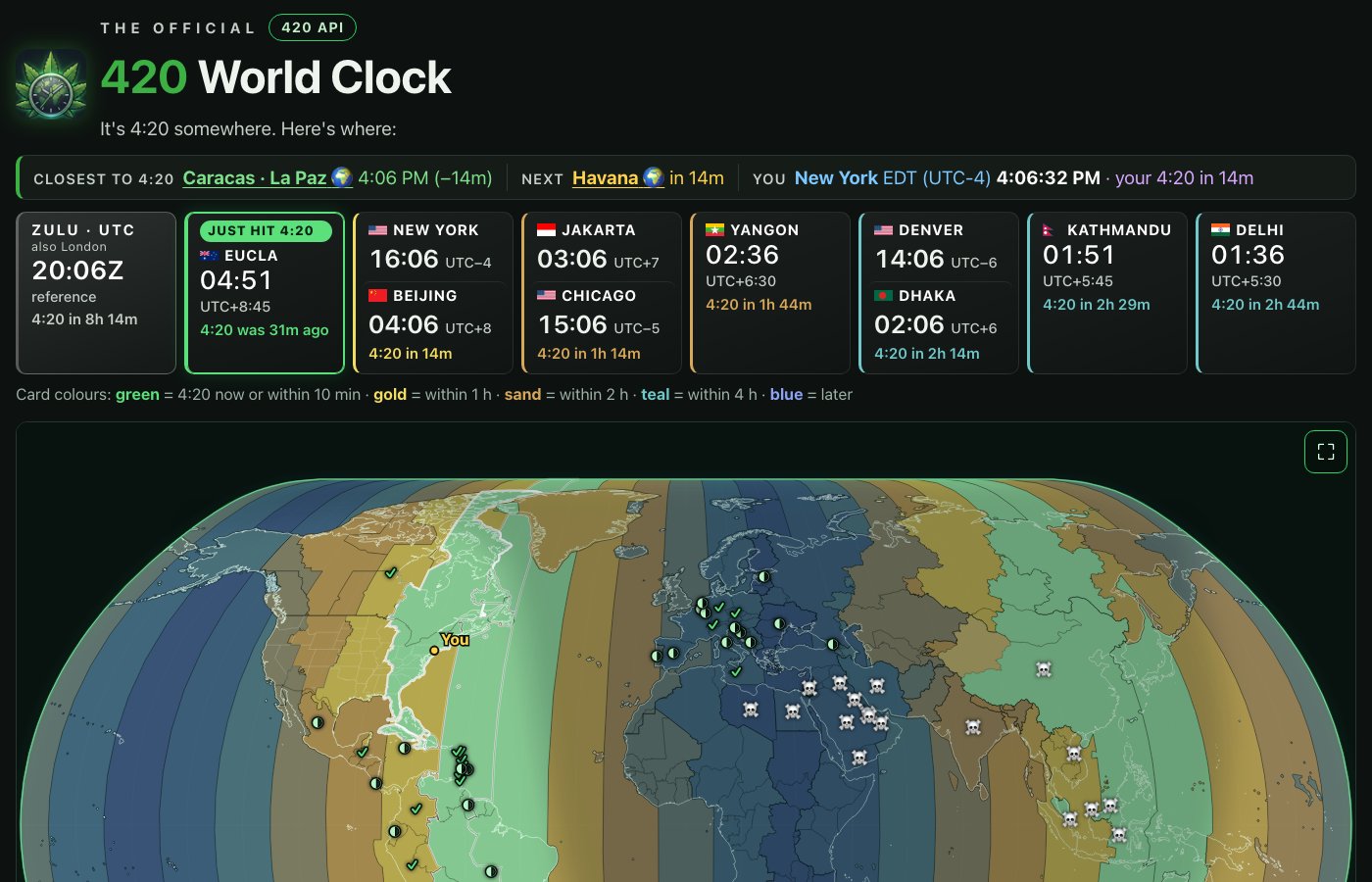
    The Official 420 World Clock at 420.menow.us shows, live, exactly where on Earth it is 4:20 right now, and how long until it is 4:20 everywhere else. And everything behind it is a free, open-source API that anyone can build on: no account, no key, no cost.

    It’s 4:20 somewhere. Now there is a precise, public answer to where.

    The Official 420 World Clock: a world map divided into time zones, colored from red to bright green by how close each zone is to 4:20
    The Official 420 World Clock at 420.menow.us.

    The clock

    • A live map of every time zone on Earth: 66 zones, built from the open timezone-boundary-builder boundaries, colored by how far each one is from 4:20, from deep red (hours away) to bright green (right now).
    • Your own clock, privately. The page reads your time zone from your browser. No location prompt, and nothing is sent to a server.
    • The countdown. The header shows the closest 4:20, the next one coming, and the minutes until it lands.
    • Fly there. Every place name links to Google Earth.
    • Know the law before you light up. Hearts mark the 32 countries where cannabis is legal or decriminalized nationally; skulls mark the 15 where a cannabis offense can carry the death penalty. Every zone has a plain-language law card.
    The 420 World Clock web page showing the status line, a row of city clocks and the color-coded world map
    The live page: status line, city clocks, and the map.

    The API: free, read-only, no key

    api.420.menow.us serves the same data the clock uses. Open any address in a browser and you get a readable page; ask from code and you get JSON. Full reference: api.420.menow.us/docs.

    Endpoint What it answers
    /v1/now Is it 4:20 anywhere right now? The closest place, what’s next, and the countdown queue
    /v1/zones Every map zone with its local time and distance from 4:20
    /v1/zones/{tzid} One zone, e.g. America/New_York
    /v1/zones/{tzid}/law The law card for one zone
    /v1/zones/{tzid}/places Every place in one zone, each with its own law card
    /v1/laws Cannabis law status for every country
    /v1/laws/{iso2} Full law card for one country, e.g. NL
    /v1/laws.sqlite The whole law database as one SQLite file, for offline apps
    /v1/time The server clock, cross-checked against the U.S. Naval Observatory
    /v1/meta Data version, and the offline database for apps

    One call answers the question. Asked at 4:03 p.m. New York time today, /v1/now said the next 4:20 was 17 minutes away, landing at once in Caracas, Havana, New York and Manila:

    curl https://api.420.menow.us/v1/now
    
    "is_420_somewhere": false,
    "closest": { "place": "Caracas", "minutes_until_next_420": 17 },
    "queue": [ { "in_minutes": 17,
                 "places": ["Caracas", "Havana", "New York", "Manila"] } ]
    420 World Clock API banner: a glowing globe clock reading 04:20 with the words Free, Read-only, No key required
    Free. Read-only. No key required.

    Open source

    The API’s code is public on GitHub under the MIT license: github.com/LIBCSYS/420-world-clock-api. Read it, run it, fork it, put it in your own app. Time zone rules are pinned to the official tz database (2026e), so the answers stay correct when governments change their clocks.

    Built by LIBCSystems in Long Island, New York.

    All the links

  • Jack Smith Had the Goods on Trump: All the Evidence, and What It Takes to Finish the Job

    Jack Smith Had the Goods on Trump: All the Evidence, and What It Takes to Finish the Job

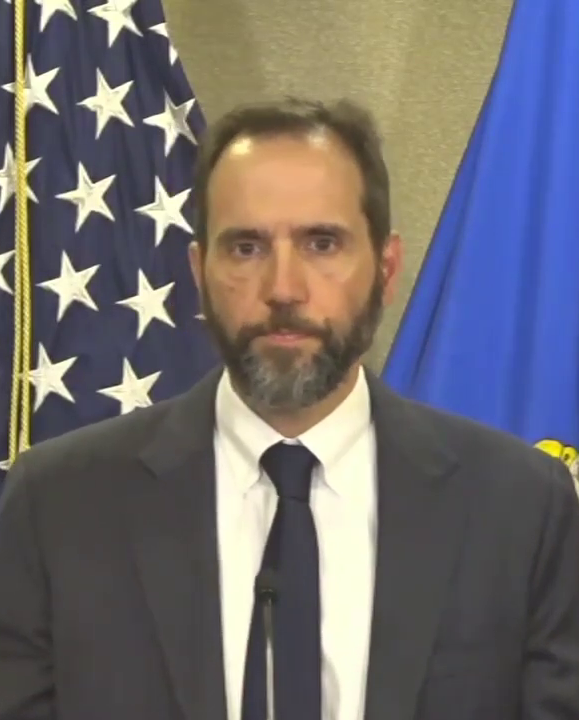
    Above: Jack Smith, former U.S. Department of Justice special counsel, delivering a statement on the indictment of Donald J. Trump, June 2023. (Photo: U.S. Department of Justice, public domain.)

    This deep dive is about Jack Smith, the special counsel who built two federal criminal cases against Donald Trump — one for trying to overturn the 2020 election, one for hoarding classified documents at Mar-a-Lago — and who told the U.S. Senate on September 29, 2026 that his evidence proved “serious crimes” beyond a reasonable doubt. Neither case ever reached a jury. Here is everything he had, why it stalled, and the only roads left.

    Our view, stated plainly: we think Donald Trump is the most corrupt president in American history. What follows is not opinion — it is the record, sourced. Trump pleaded not guilty in both federal cases and has denied all wrongdoing.

    Who Jack Smith is

    • Career prosecutor, not a politician. Former chief of the Justice Department’s Public Integrity Section and chief prosecutor at the Kosovo Specialist Chambers in The Hague, where he prosecuted war crimes.
    • Appointed November 18, 2022 by Attorney General Merrick Garland to take over both Trump investigations.
    • Resigned in January 2025, days before Trump’s second inauguration, after filing his final report.

    Case one: the 2020 election (Washington, D.C.)

    Indicted August 1, 2023 — four felony counts: conspiracy to defraud the United States (18 U.S.C. § 371), conspiracy to obstruct an official proceeding and obstruction of that proceeding (18 U.S.C. § 1512), and conspiracy against rights (18 U.S.C. § 241).

    The evidence, as laid out in the indictment and Smith’s final report:

    • He knew he lost. The report calls deceit — knowingly false claims of election fraud — the thread running through everything. Aides, officials and his own campaign told him the fraud claims were false; he kept making them.
    • The states. Pressure on officials in states he lost to block certification — including the January 2, 2021 call asking Georgia’s secretary of state to “find 11,780 votes.”
    • The fake electors. Slates of fraudulent electors organized in seven states Joe Biden won, to be presented to Congress as real.
    • The Justice Department. Pressure on DOJ leadership to open what the report calls “sham election crime investigations,” and a push to install Jeffrey Clark as acting attorney general to lend them weight.
    • Mike Pence. Day-after-day pressure on the vice president to reject the electoral count — documented in Pence’s own contemporaneous handwritten notes.
    • January 6 itself. At 2:24 p.m., with the Capitol already breached, Trump posted that “Mike Pence didn’t have the courage to do what should have been done.”
    • The scale. About 250 witnesses interviewed voluntarily and 55 called before the grand jury.

    Smith’s bottom line, in Volume One of his final report (released January 14, 2025): “but for Mr. Trump’s election and imminent return to the Presidency, the Office assessed that the admissible evidence was sufficient to obtain and sustain a conviction at trial.”

    What stopped it: the Supreme Court’s Trump v. United States ruling (July 1, 2024) granted presidents broad immunity for official acts, gutting the DOJ-pressure evidence. Smith re-indicted on a narrower theory in August 2024. After Trump won the election, the case was dismissed at the Justice Department’s request in November 2024, under the department’s long-standing policy that a sitting president cannot be prosecuted.

    Case two: the classified documents (Florida)

    Indicted June 2023; superseded in July 2023 to 40 counts, most of them willful retention of national defense information under the Espionage Act, plus obstruction and false statements. Aide Walt Nauta and Mar-a-Lago property manager Carlos De Oliveira were charged alongside him.

    The evidence, from the indictment:

    • Boxes everywhere. Classified records stored in a ballroom, a bathroom and shower, an office, his bedroom and a storage room at Mar-a-Lago — a club with thousands of guests.
    • The Bedminster tape. A July 2021 recording of Trump showing a military document to people without clearances: “As president I could have declassified it. Now I can’t.”
    • Hiding them from his own lawyer. Nauta moved dozens of boxes before a Trump attorney searched for subpoenaed records; Trump suggested the lawyer “pluck” out anything bad.
    • The false certification. In June 2022 his team handed over 38 documents and certified a diligent search had been done. Two months later, on August 8, 2022, the FBI found more than 100 classified documents.
    • The camera server. After a grand jury subpoenaed Mar-a-Lago security footage, De Oliveira allegedly told a staffer that “the boss” wanted the server deleted.

    What stopped it: Judge Aileen Cannon, a Trump appointee, dismissed the case in July 2024, ruling Smith’s appointment unlawful. The Justice Department dropped its appeal as to Trump after the election. On February 23, 2026, Cannon permanently blocked the release of Smith’s Volume Two, the documents report — so the public has still never seen it.

    Smith under oath, September 29, 2026

    • “Beyond a reasonable doubt.” Testifying to the Senate Judiciary Committee, Smith said his investigation developed proof beyond a reasonable doubt that Trump engaged in serious crimes (NPR, ABC News).
    • “I stand by” it. Faced with the same facts today, he said, he would make the same decision to charge — regardless of party.
    • Republicans’ answer was to accuse him of abusing his authority, with some calling for him to be prosecuted instead.

    The scoreboard, as of today

    • Federal election case: dismissed, November 2024.
    • Federal documents case: dismissed; Volume Two sealed.
    • Georgia election case: dropped and dismissed November 26, 2025 after Fani Willis was removed and a new prosecutor took over.
    • New York: the one that stuck. Trump stands convicted of 34 felony counts of falsifying business records. His state appeal is pending, and in August 2026 a federal judge again refused to move the case to federal court.

    Next steps: what it would actually take

    The clock is the enemy. Most federal crimes carry a five-year statute of limitations, and Justice Department policy bars charging a sitting president. Trump’s term runs to January 20, 2029.

    • January 6 charges: the window has closed. Five years from the conduct ran out in January 2026.
    • Documents charges: the window closes in 2027. The retention ended with the August 2022 search and the obstruction happened in mid-2022, so the five-year clock runs out in mid-to-late 2027 — before he leaves office. This is also the strongest case legally: keeping documents after leaving office is private conduct, outside the Supreme Court’s immunity ruling.
    • Road one: Congress pauses the clock. Congress can extend a limitations period that has not yet expired; what the Constitution forbids is reviving one that already has (Stogner v. California, 2003). A law tolling the clock while a president is in office would have to pass both chambers and survive a veto — before mid-2027. That runs straight through the November 3, 2026 midterms.
    • Road two: free Volume Two. Transparency groups American Oversight and the Knight First Amendment Institute are appealing Cannon’s order to the Eleventh Circuit. If it is released, the public sees the documents evidence in full.
    • Road three: New York. The 34-count conviction stands unless the appeals courts throw it out. Defending it is the Manhattan district attorney’s job, and it is the only criminal verdict on the books.
    • Road four: impeachment. The House can impeach and the Senate can convict and disqualify — but the penalty is removal from office, not prison, and it takes two-thirds of the Senate.
    • The wild card: pardons. Whether a president can pardon himself has never been tested in court.

    Bottom line: Jack Smith did his job. The evidence exists, grand juries in two cities voted to indict on it, and he stood by it under oath this fall. Whether anyone ever answers for it now depends less on prosecutors than on Congress, the courts — and the voters in two weeks.

    Sources: ABC News on Volume One · NPR and CNN on the Senate testimony · CBS News and CNN on Volume Two · the documents case · NPR on Georgia · CNBC on New York. Photo: U.S. Department of Justice via Wikimedia Commons, public domain.

  • You Turned Off the Body Cam. You Don’t Get a Bodyguard.

    You Turned Off the Body Cam. You Don’t Get a Bodyguard.

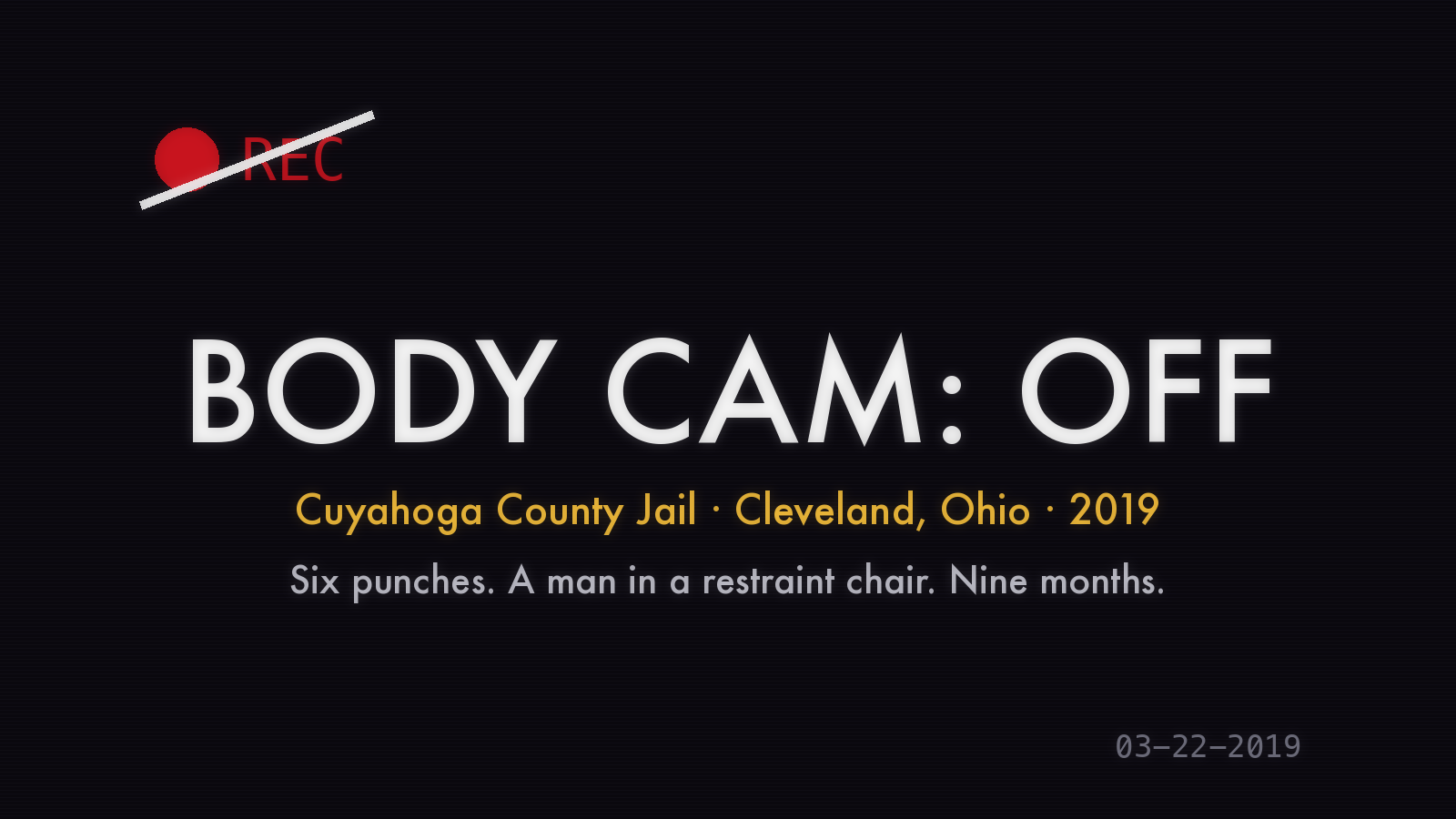
    A man with a lifelong mental illness sits strapped into a restraint chair in the Cuyahoga County Jail in Cleveland, Ohio. His arms are bound. A mask covers his face. He cannot run, cannot block, cannot do anything at all. A corporal reaches up, switches off the body camera on his own chest, and punches him in the face six times.

    That is not a rumor or a hunch. Two guards pleaded guilty to it. And when the bill came due, the system that hired them did what it always does for its own: it found them the softest landing it could.

    The chair

    On March 22, 2019, Corrections Corporal Nicholas Evans and Officer Timothy Dugan secured 47-year-old Terrance Debose, a mentally ill detainee, in a restraint chair. According to Prison Legal News, Evans then turned off his body camera. What he forgot was the jail’s own surveillance system, which kept recording as the guards dragged the chair into a cell. Evans punched Debose six times in the face; Dugan struck him twice. They left him there, concussed and bleeding, restrained and alone, for about two hours.

    Local outlets including Cleveland 19 aired the footage. Ohio Attorney General Dave Yost put it plainly, as quoted by Prison Legal News: “These two men abused their authority to pound a prisoner strapped to a chair.”

    The deal

    Here’s what “abused their authority to pound a prisoner strapped to a chair” was worth in court.

    On October 15, 2019, Evans pleaded guilty to attempted felonious assault and to tampering with evidence. That second charge is the body camera. He didn’t just beat a restrained man; he tried to make sure there would be no proof. Dugan pleaded guilty to attempted abduction and misdemeanor assault. Both were allowed to resign instead of being fired.

    On February 26, 2020, according to the Ohio Attorney General’s office, Evans got nine months. Dugan got ten days, and the AG’s release notes where he served them: the Geauga County Jail, a different county’s lockup, not the Cuyahoga County Jail where he’d worked and where the men he guarded were still sitting.

    Nine months and ten days, for a beating on camera that left a restrained man with a concussion. Debose’s verdict on that, reported by Cleveland 19 and others: “That isn’t justice.” He’s right.

    The Cuyahoga County Justice Center complex in downtown Cleveland, which houses the county jail
    The Justice Center complex in downtown Cleveland, home of the Cuyahoga County Jail. Photo: Aivazovsky at English Wikipedia, Wikimedia Commons, CC BY-SA 3.0.

    It wasn’t one bad night

    The Debose beating didn’t happen in a vacuum. It happened inside one of the worst-run jails in the country, during a stretch when, by multiple accounts, the people in charge were busy protecting themselves.

    • Eight people died in the overcrowded jail in 2018, according to Prison Legal News. A 2018 U.S. Marshals Service review found inhumane conditions and a pattern of abusive guard behavior, including withholding food as punishment and excessive force.
    • The warden told a guard to kill his camera. After detainee Joseph Arquillo died of an overdose in August 2018, Warden Eric Ivey ordered a guard to turn off his body camera during the investigation. Ivey pleaded guilty to filing a false report in October 2019. His sentence: a $2,000 fine and probation, in exchange for cooperating.
    • The restraint chair, again. In July 2018, Officer Robert Marsh was caught on video punching Chantelle Glass while she was strapped into a restraint chair. Officer Idris-Farid Clark pepper-sprayed her at close range for six seconds. Marsh got 30 days. Clark, who was also charged with evidence tampering and extortion, got 18 months.
    • Guards running drugs. Officers Stephen Thomas and Marvella Sullivan were indicted in September 2019 with a prisoner for allegedly smuggling cellphones, vape pens, heroin, fentanyl and marijuana into the jail for cash, an investigation that began after an inmate’s overdose.
    • The man at the top. Former jail director Ken Mills was indicted for lying to county council about blocking the hiring of nurses before the run of deaths, and for dereliction of duty. A jury convicted him on four misdemeanor counts in 2021 and he served nine months, but News 5 Cleveland reports an appeals court later reversed those convictions and ordered a new trial.

    Count the body cameras in that list. A corporal switches his off before a beating. A warden orders one off during a death investigation. That isn’t a coincidence. It’s a culture that knew exactly what the cameras were for, and made sure they weren’t on when it mattered.

    How long they actually did

    WhoWhatTime
    Nicholas Evans, corporalTurned off his body camera, punched restrained Terrance Debose six times; pleaded to attempted felonious assault and tampering with evidence9 months in prison
    Timothy Dugan, officerTwo more punches; pleaded to attempted abduction and assault10 days, in the Geauga County Jail
    Robert Marsh, officerPunched Chantelle Glass while she was strapped into a restraint chair30 days
    Idris-Farid Clark, officerPepper-sprayed Glass at close range; also charged with evidence tampering and extortion18 months
    Eric Ivey, wardenOrdered a guard’s body camera off during a death investigation; pleaded to filing a false reportNo jail: $2,000 fine and probation
    Ken Mills, jail directorConvicted of falsification and dereliction of dutyServed 9 months; convictions later reversed on appeal

    Sources: Ohio Attorney General; Prison Legal News; News 5 Cleveland (linked below).

    Watch the footage

    The jail’s own surveillance video of the Debose beating was released in June 2019. Warning: it is graphic.

    The courtroom breakdown that sent me down this road:

    The protection racket

    Every one of these men knew the rules better than any prisoner in that building. They enforced them every day. And when they broke them, the system bent over backwards: reduced charges, “attempted” assault for six completed punches, resignations instead of firings, jail time served in another county, a fine and probation for the warden who killed a camera at a death scene.

    That’s what protection looks like in America when you wear the uniform. Not a cell with your name on it. A plea deal, a short stay somewhere quieter, and a lawyer telling the judge how dangerous it would be for you to serve time like everybody else.

    I say no. A guard convicted of beating a man in restraints should do his time the same way the man he beat would: general population, no badge discount, no special wing, no transfer to a friendlier county, and his record in plain words where everybody can read it. He spent his career counting on the dark. The least the rest of us can do is turn the lights on.

    Sources

  • Five Days, One Smile, and a McDonald’s: How Luigi Mangione Caught Himself

    Five Days, One Smile, and a McDonald’s: How Luigi Mangione Caught Himself

    There’s a version of this story that the internet fell in love with: the handsome Ivy League ghost who walked up to a health-insurance CEO on a Manhattan sidewalk, shot him, and melted into the city like smoke. A folk hero. A phantom. A legend in a puffer jacket.

    Here’s the version that actually happened. He checked into a hostel with a fake ID, pulled his mask down to flirt with the front-desk clerk under a security camera, and five days later was sitting in a McDonald’s in Altoona, Pennsylvania, with the gun, the silencer, the same fake ID, and a handwritten explanation of why he did it — all in his backpack, all within arm’s reach of the cops who walked in and recognized him.

    The legend says he got caught “a day later.” He didn’t. It was five days. He had five full days, and he spent them carrying the evidence around Pennsylvania like a man who’d misread the assignment.

    Same rules as always at this bar. What Luigi Mangione admitted under oath in federal court, I state flat — and as of August 14, 2026, that includes the killing itself. What police and prosecutors say they found, I attribute to them. His New York murder charges are still pending, so where that case is concerned, he’s presumed innocent, and I’ll say so.

    And one thing before the jokes start: the man who died was Brian Thompson, 50, the CEO of UnitedHealthcare and a father of two, shot from behind on his way into a work conference. Whatever you think of his industry — and this bar has opinions about American health insurance — nothing in this post is about him. It’s about the guy who thought he was a mastermind.

    Who he was

    On paper, Mangione was the kid every Maryland parent brags about. Valedictorian at Gilman, a private boys’ school in Baltimore. Bachelor’s and master’s in engineering from the University of Pennsylvania in 2020. A gig at Firaxis working on Civilization VI while he was still a student. A remote data-engineering job after that.

    Then the slide, per his own writing and the reporting since. Chronic back pain, a spinal fusion in July 2023, a long drift through Hawaii and Asia. He went quiet on social media in mid-2024. His family says they stopped hearing from him around July. On November 18, 2024, his mother filed a missing-person report with San Francisco police.

    Six days after that report, he got off a bus in Manhattan.

    The run-up

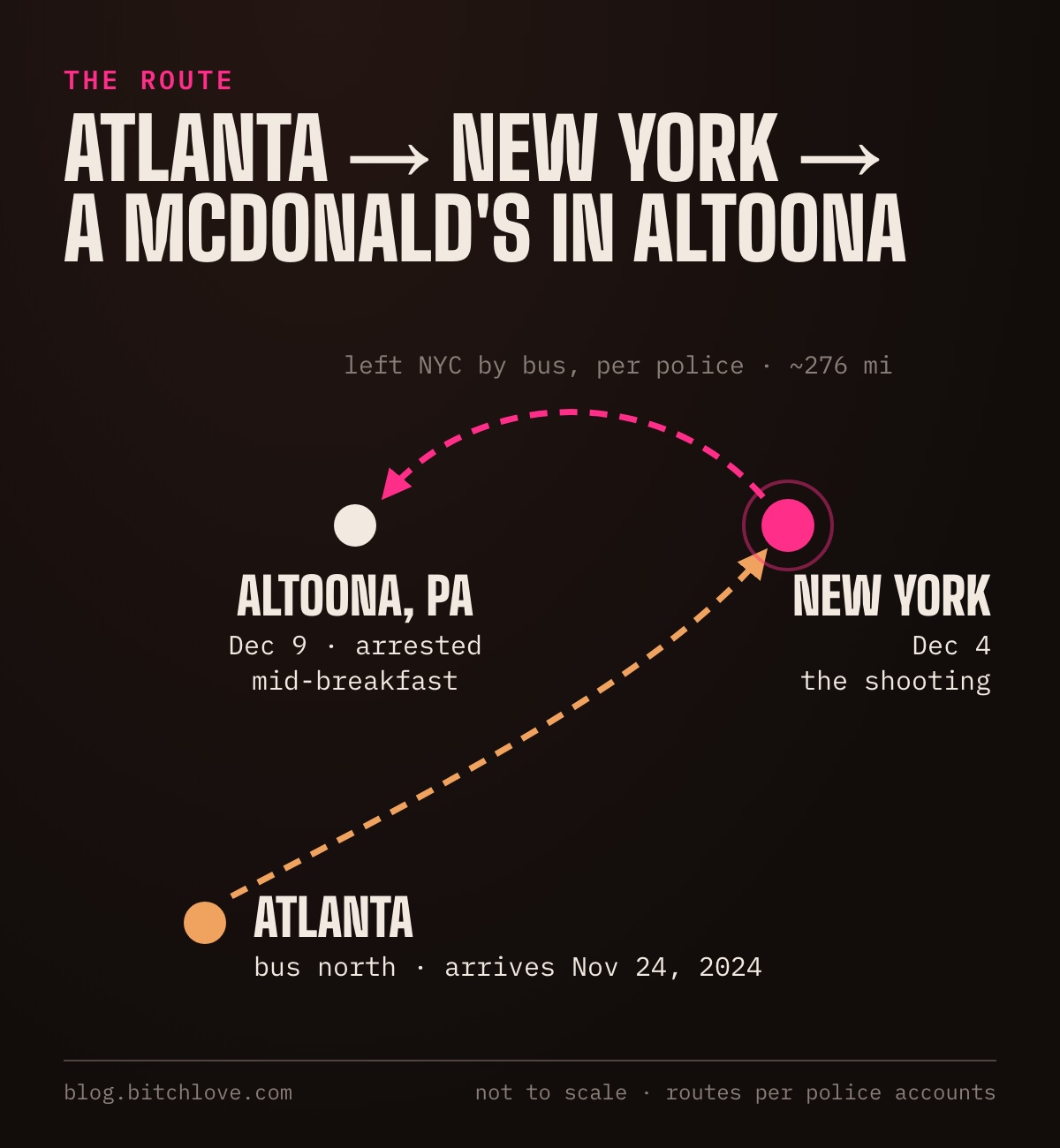
    November 24, 2024: a bus that started in Atlanta pulls into the Port Authority Bus Terminal on 42nd Street. Mangione takes a cab, then another, and checks into the HI New York City Hostel on Amsterdam Avenue on the Upper West Side, according to the NYPD‘s timeline. He hands the desk a New Jersey driver’s license in the name of “Mark Rosario.”

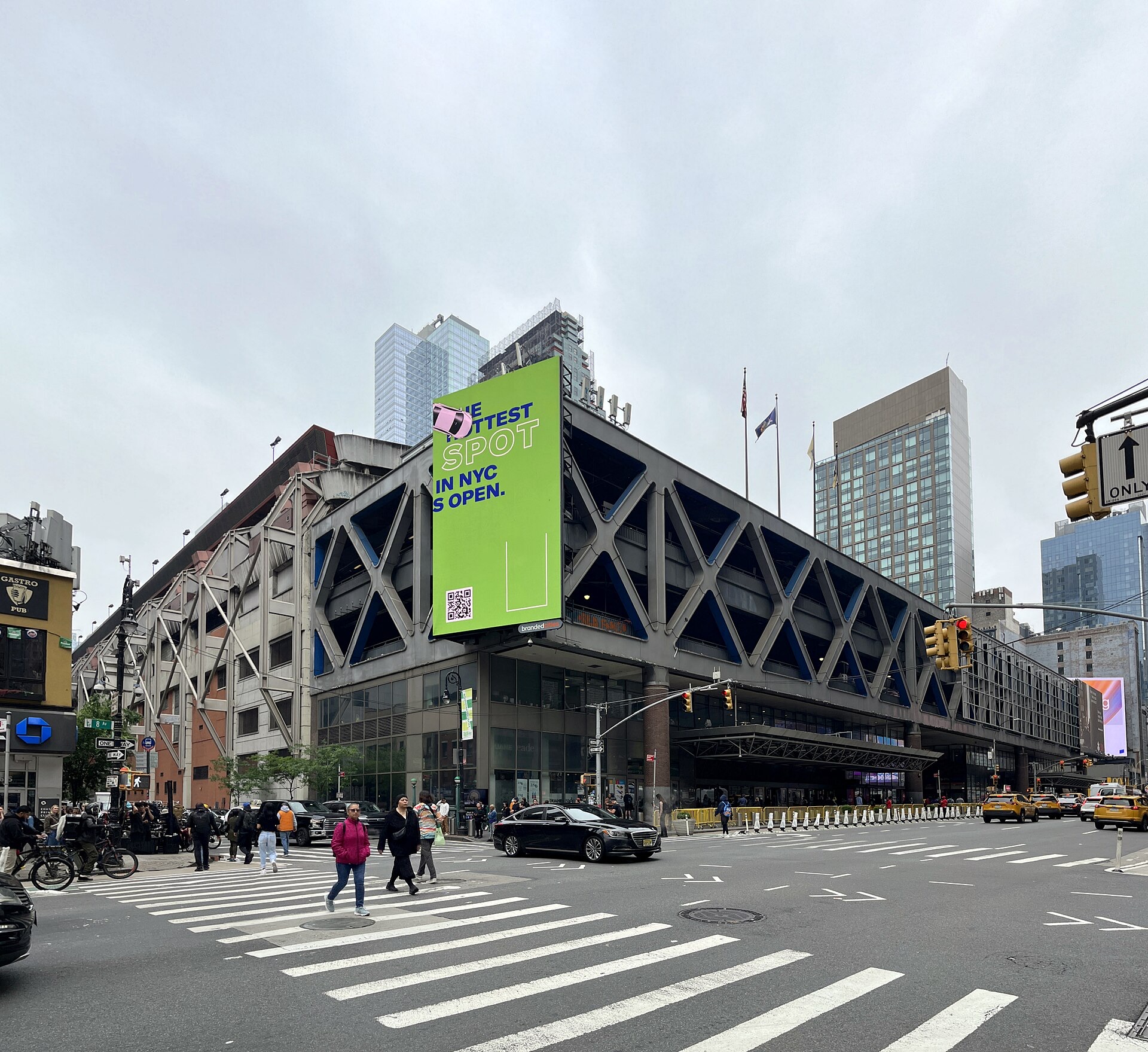
    Port Authority Bus Terminal at 42nd Street and Eighth Avenue, Manhattan
    Port Authority Bus Terminal, where the Atlanta bus came in on Nov. 24, 2024. Photo: Gunnar Klack, CC BY-SA 4.0, via Wikimedia Commons

    Remember that name. He sure didn’t forget it.

    During check-in, police say, he made small talk with the clerk, and “at some point, he pulled his mask down and smiled,” as NYPD Chief of Detectives Joseph Kenny put it. The hostel camera caught the whole grin. A man about to commit the most-watched killing of the year, and he couldn’t resist the meet-cute.

    The target was in town for UnitedHealth Group‘s investor conference at the New York Hilton Midtown. When Mangione pleaded guilty in federal court this August, he admitted to exactly that: following Thompson to the conference. That’s what makes it federal stalking, and that’s the charge he admitted.

    Route graphic: Atlanta to New York on Nov. 24, the shooting in New York on Dec. 4, arrest in Altoona, Pennsylvania on Dec. 9
    The route, per police accounts. Not to scale.

    December 4

    About 6:45 a.m., outside the Hilton at Sixth Avenue and 54th Street, a masked man waited for Brian Thompson and shot him in the back and the leg. Thompson died. The gunman walked off, got on an electric bike, and rode up into Central Park.

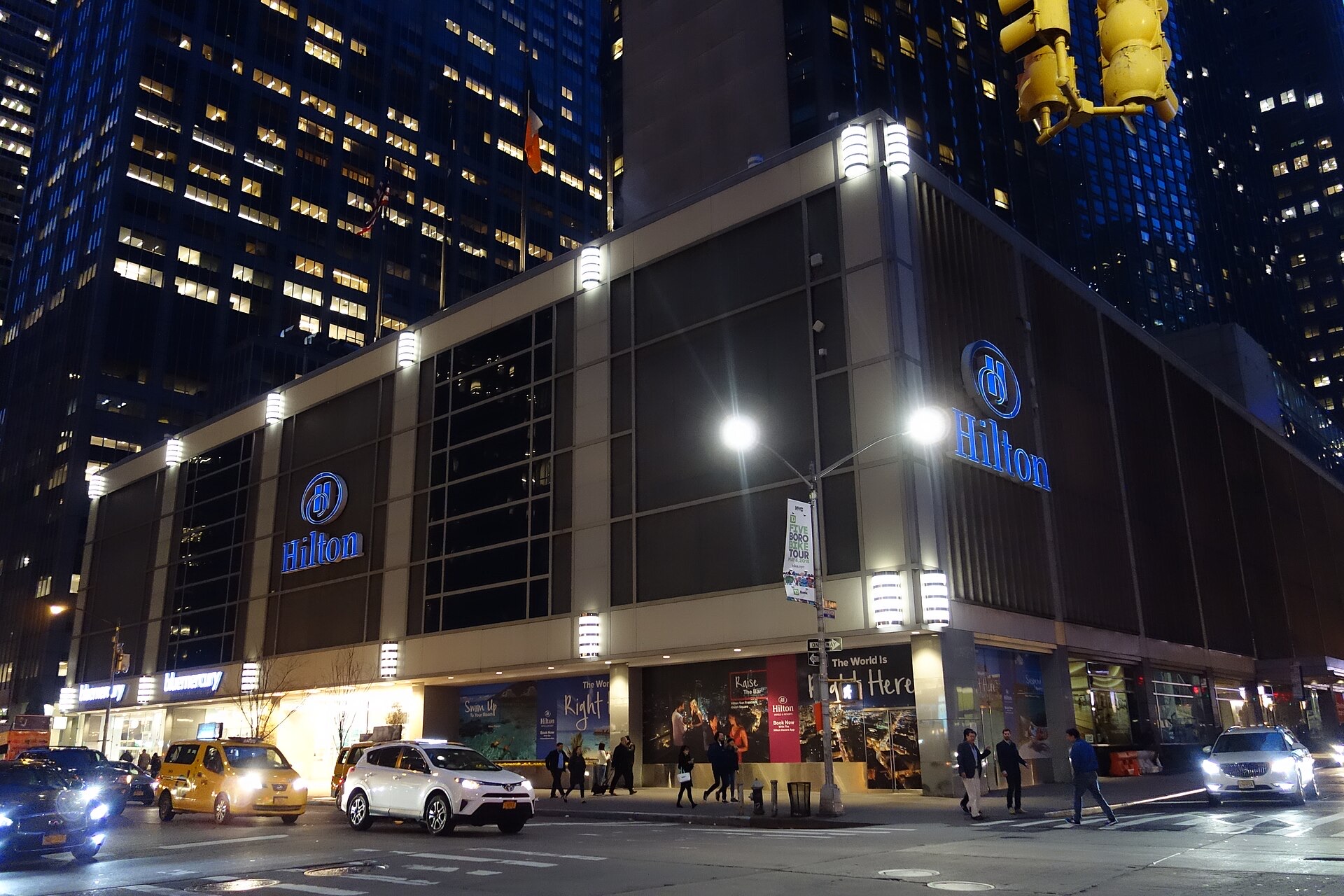
    The New York Hilton Midtown at night, corner of 54th Street and Sixth Avenue
    The New York Hilton Midtown, 54th Street and Sixth Avenue. Photo: Tdorante10, CC BY-SA 4.0, via Wikimedia Commons

    He’d also left a little calling card. The shell casings recovered at the scene were marked with three words: “delay,” “deny,” “depose” — a riff on the insurance-industry playbook. A detail that read like poetry to his online fan club and like a signed confession to everyone else.

    He went into Central Park wearing a backpack. He came out without one. Police later said he left New York by bus that same day.

    The five-day manhunt

    The NYPD had a masked face, a bike, a backpack, and a city full of cameras. What they got next was the gift that kept on giving: on December 5, they released the hostel photos. Mask down. Big smile. The most cooperative suspect in the history of the department.

    The next day, December 6, investigators found the backpack in a wooded stretch of Central Park. Inside, per reports: a jacket and a stack of Monopoly money. No gun. Just board-game cash, as if the whole thing were a bit.

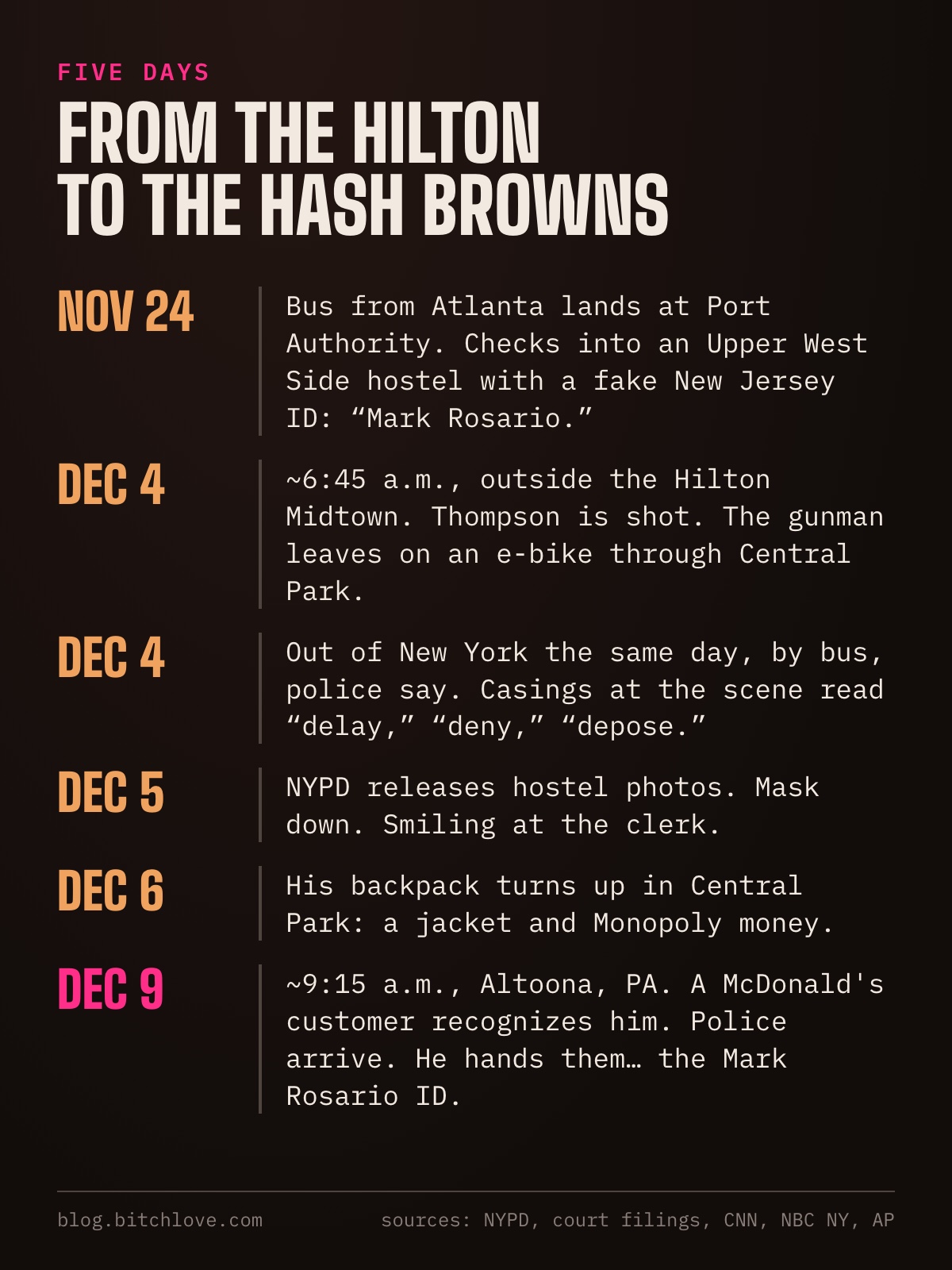
    Timeline graphic from Nov. 24 to Dec. 9, 2024: arrival, the shooting, hostel photos released, backpack found, arrest in Altoona
    Five days, start to finish.

    Meanwhile, a thousand miles west, UnitedHealthcare’s headquarters in Minnesota was under police watch.

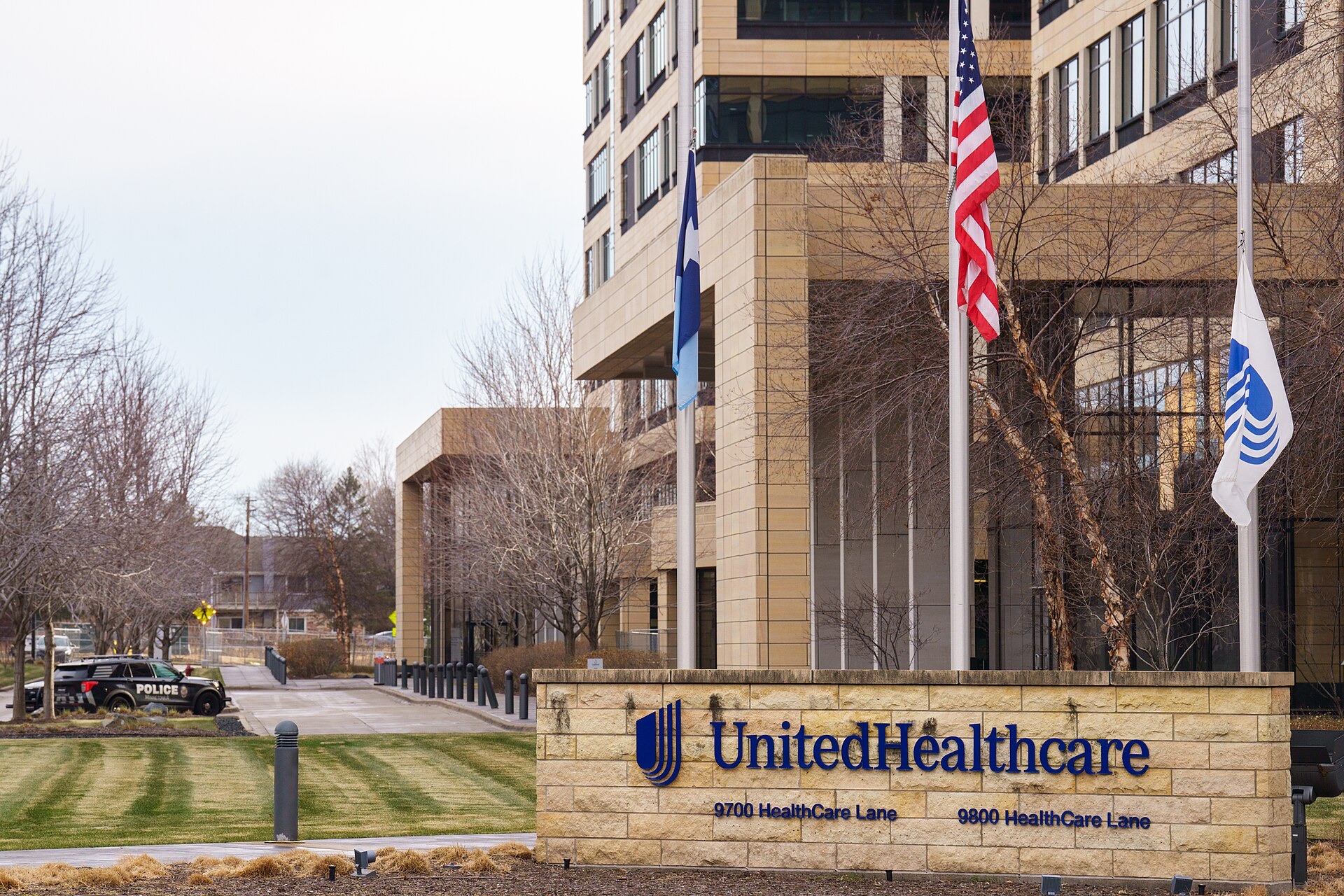
    UnitedHealthcare corporate headquarters sign in Minnetonka, Minnesota, December 8, 2024
    UnitedHealthcare headquarters, Minnetonka, Minn., Dec. 8, 2024, the day before the arrest. Photo: Chad Davis, CC BY 2.0, via Wikimedia Commons

    The arrest: a parade of blunders

    December 9, 2024, around 9:15 in the morning. A McDonald’s in Altoona, Pennsylvania, about 276 miles from the Hilton. A customer looks across the dining room, thinks the guy in the back with the laptop and the blue medical mask looks an awful lot like the man on the news, and tells an employee, who calls 911.

    Downtown Altoona, Pennsylvania, with the Cathedral of the Blessed Sacrament on the hill
    Altoona, Pennsylvania. Five days after the shooting, this is where the “ghost” turned up. Photo: 1ericmiller1, CC BY-SA 3.0, via Wikimedia Commons

    Officers walk up. They ask him to lower the mask. Per the court papers, the moment he did, they “immediately recognized him as the suspect.” The same face he’d so generously shown the hostel camera.

    Then they ask for ID. And this is the part that should be taught in every criminology class in America: he hands them the New Jersey license. In the name of Mark Rosario. The exact fake name from the hostel register — the one the NYPD already had.

    You couldn’t write it. If a screenwriter pitched it, the studio would send it back for being too stupid.

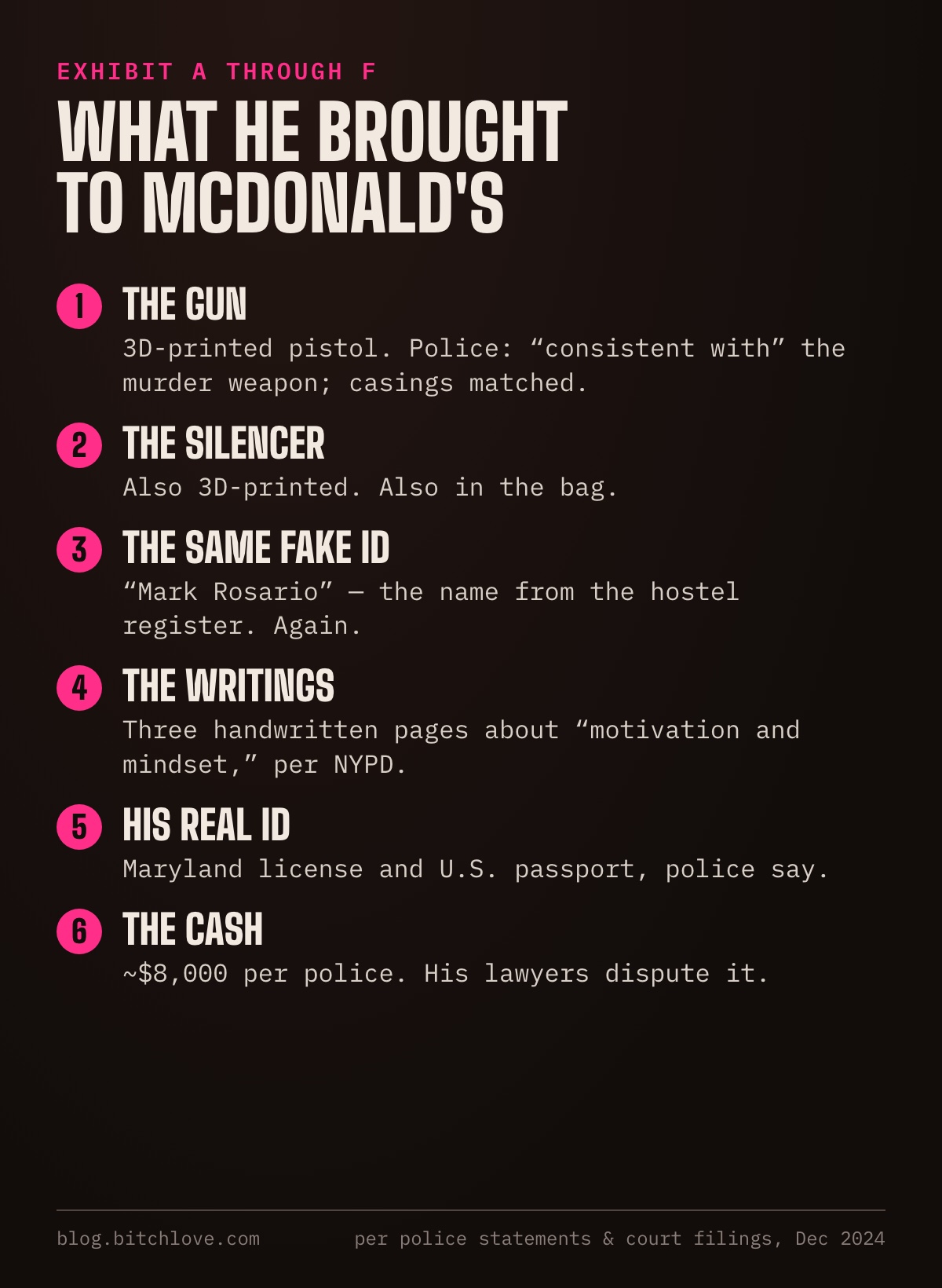
    Here’s what police say came out of his things:

    Graphic listing items police say Mangione had at arrest: 3D-printed pistol, 3D-printed silencer, the same fake ID, three handwritten pages, his real license and passport, and cash
    Exhibit A through F, per police statements and court filings.
    • The gun. A 3D-printed pistol with a Glock magazine, which NYPD Commissioner Jessica Tisch said was “consistent with” the murder weapon. Police later said the casings matched.
    • The silencer. Also 3D-printed. Also just there.
    • The ID. Mark Rosario, back by popular demand.
    • The writings. Three handwritten pages that, per the NYPD, “speak to both his motivation and mindset.” He brought his own motive. To a McDonald’s.
    • The real him. His actual Maryland license and a U.S. passport, police say.
    • The money. Police said about $8,000 in cash. His lawyers have disputed that number, so take it with a grain of salt.

    Five days. A head start most fugitives only dream of. And the man walked into a fast-food restaurant carrying the murder weapon, the silencer, a written explanation, and the alias that was already on every detective’s whiteboard. The “phantom” was caught by a guy eating breakfast.

    The fandom never really reckoned with that part. A December 2024 Economist/YouGov poll found about one in five Americans viewed him favorably, and a GiveSendGo fund for his defense passed $1.5 million by this spring. Underneath all of it is a guy whose getaway plan apparently ended at a McMuffin.

    The courts, 2025–2026

    He was charged in three places at once. Pennsylvania charged him with the gun, the forgery and the fake ID. Manhattan charged him with murder, and a grand jury indicted him on 11 counts on December 17, 2024, including first-degree murder “in furtherance of terrorism.” The federal government charged him too, with a death-eligible count, and in April 2025 the U.S. Attorney General announced prosecutors would seek the death penalty.

    Manhattan Criminal Courts Building at 100 Centre Street
    100 Centre Street, Manhattan’s criminal courthouse, home of the state case. Photo: Beyond My Ken, CC BY-SA 4.0, via Wikimedia Commons

    Then the case started shedding pieces:

    • September 16, 2025: Judge Gregory Carro tossed the two state terrorism-murder counts.
    • January 30, 2026: Federal Judge Margaret Garnett dismissed the death-eligible counts. No death penalty.
    • May 18, 2026: Judge Carro ruled that the Altoona officers’ search of his backpack at the McDonald’s was an improper warrantless search, and suppressed what came out of it in the state case. The gun, recovered later at the station, still comes in. The federal judge went the other way and allowed the backpack evidence in her courtroom.

    Think about that one. The single smartest thing that happened for Luigi Mangione’s defense in two years was a cop’s procedural mistake. His own contribution was packing the bag.

    Daniel Patrick Moynihan United States Courthouse in Lower Manhattan
    The Daniel Patrick Moynihan U.S. Courthouse, where the federal case played out. Photo: Jim.henderson, CC BY-SA 3.0, via Wikimedia Commons

    Then came August 14, 2026. In Manhattan federal court, Mangione pleaded guilty to two federal stalking counts, with no plea deal reported. And he said it out loud: “On the morning of Dec. 4, 2024, I shot Mr. Thompson in Manhattan, and he died.” He described his motive as opposition to the health-insurance system.

    So much for the ghost. So much, too, for every corner of the internet that spent two years insisting he was framed.

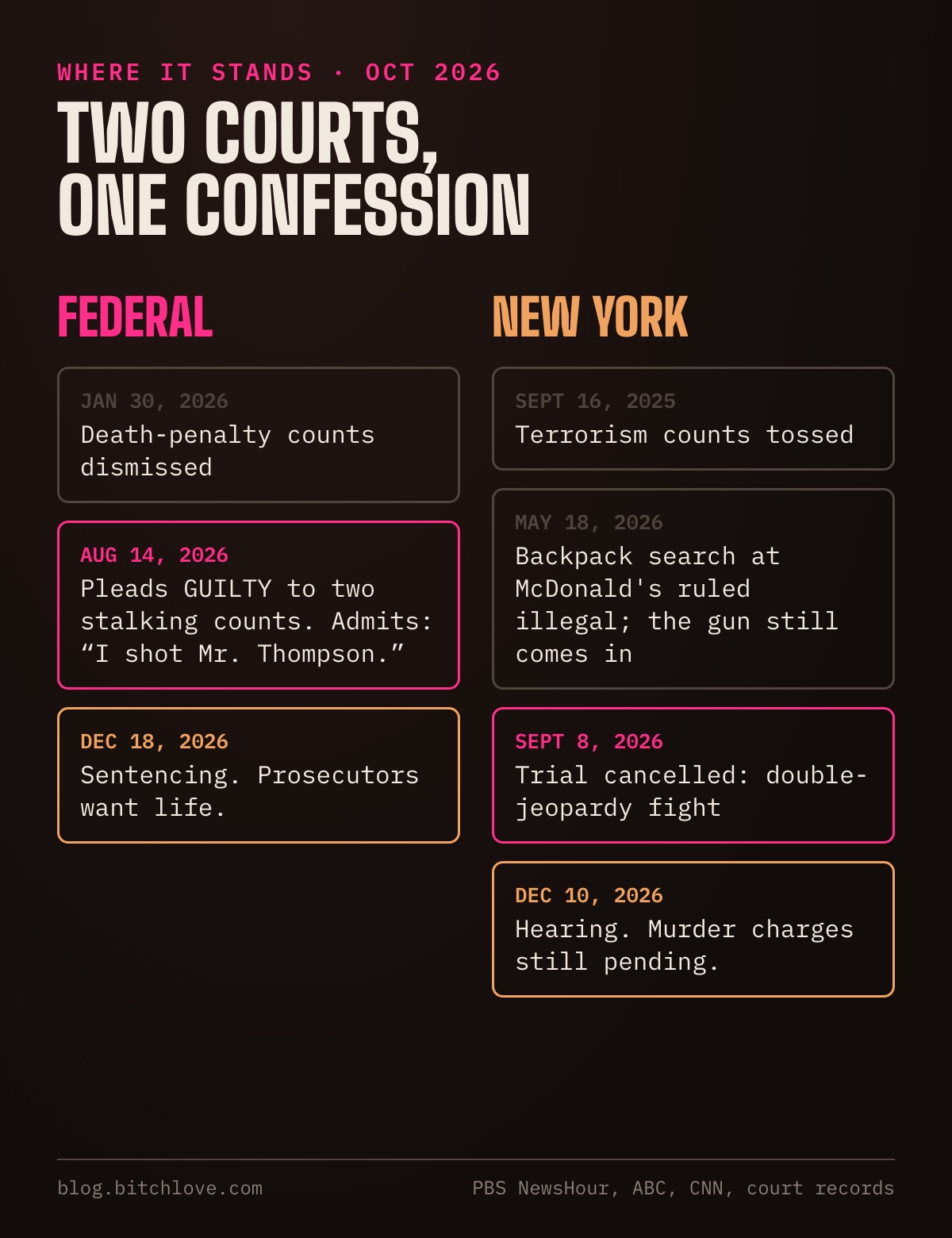
    Where it stands now

    Graphic: federal case, guilty plea Aug. 14 and sentencing Dec. 18, 2026; New York case, trial cancelled Sept. 8 over double jeopardy, hearing Dec. 10, 2026
    Two courts, one confession. Status as of October 2026.
    • Federal: sentencing is set for December 18, 2026. Prosecutors want life in prison. The federal guidelines call for 24 to 30 years.
    • New York: the state murder trial was supposed to start with jury selection on September 8. Judge Carro cancelled it after the federal plea, because the defense argues that trying him again for the same conduct is double jeopardy. The Manhattan DA’s answer is due October 9, and there’s a hearing on December 10, 2026. The state murder charges remain pending, and on those he’s presumed innocent until a jury, or a plea, says otherwise.

    Which leaves us here. A man who spent months planning, printed his own gun, scrawled a slogan on the bullets and wrote down his reasons, then lasted five days because he couldn’t stop showing people his face and couldn’t stop using the same fake name. The insurance industry didn’t catch him. A smile and a McDonald’s customer did.

    Brian Thompson’s kids get to grow up with that. Luigi Mangione gets a sentencing date.

    Sources: Wikipedia, “Luigi Mangione” (case chronology); PBS NewsHour/AP on the federal plea and state postponement; ABC News; CNN’s Dec. 2024 timeline; NBC New York on the fake ID; West Side Rag on the hostel; WESA on the Altoona arrest; AP via WRDW on the May 2026 suppression ruling. Items found at the arrest are as described by police and prosecutors; the cash amount is disputed by the defense. Photos via Wikimedia Commons under the licenses credited; graphics by blog.bitchlove.com.

  • The Coke Was in His Car, the Lie Was in His Report, and He’s Never Spent a Night in Jail

    The Coke Was in His Car, the Lie Was in His Report, and He’s Never Spent a Night in Jail

    Picture the sally port of the Drew County jail, December 17, 2023. A woman named Amanda Prince is standing in front of an Arkansas State Police cruiser, handcuffed, arrested for driving on a suspended license. She knows she’s wrong on that one. She’s said so. Behind her, Trooper Christian Morphis is searching the back seat where she’d been sitting — and he comes up holding a little bag of cocaine. Felony. The kind of charge that eats years of your life.

    Nine months later a jury looked at that story and threw it out of the courtroom. Then the state’s own investigators looked harder and concluded the story wasn’t just unconvincing — it was impossible. The trooper got fired. Then decertified. Then sued. You know what he never got? Charged.

    Same rules as always at this bar. If something is verified by several outlets, I state it flat. If it’s one outlet’s reporting, I name the outlet. If it’s an allegation, I tell you whose. The planting itself is an allegation — Prince’s, in a federal lawsuit — and Arkansas State Police deny it, so you’ll see both. What the state’s own investigation found about his report is not an allegation. It’s their finding.

    The stop

    Monticello, Arkansas. Morphis pulls Prince over for driving on a suspended license — per the Arkansas Times, he had already cited her once before for the very same thing. She admitted it, then and later: “I was in the wrong for driving on a suspended.” That should have been a citation and a bad afternoon.

    Instead she was cuffed, searched — or rather, not properly searched, a detail that matters enormously in a minute — and put in the back of his cruiser for the ride to the county jail.

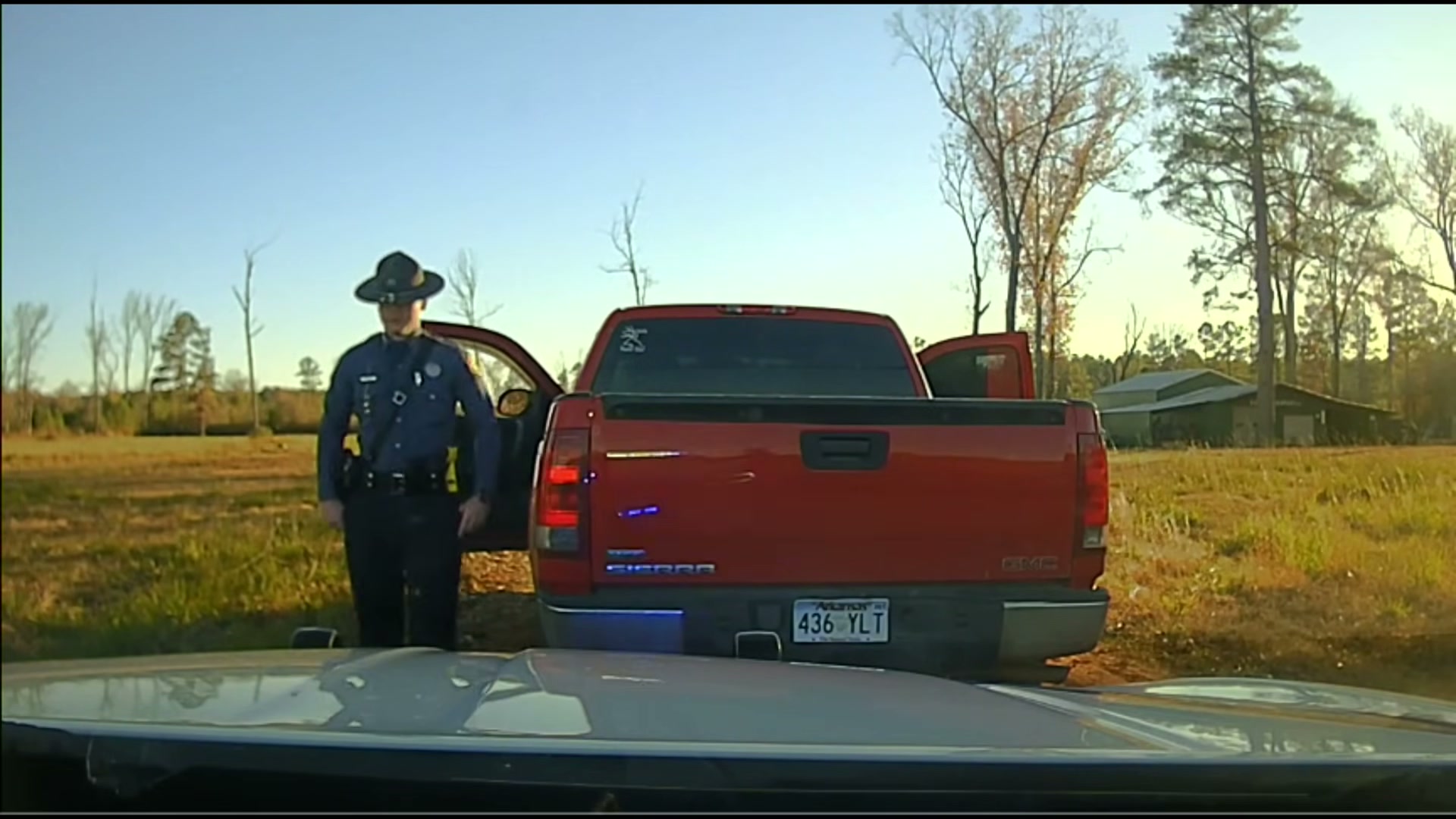
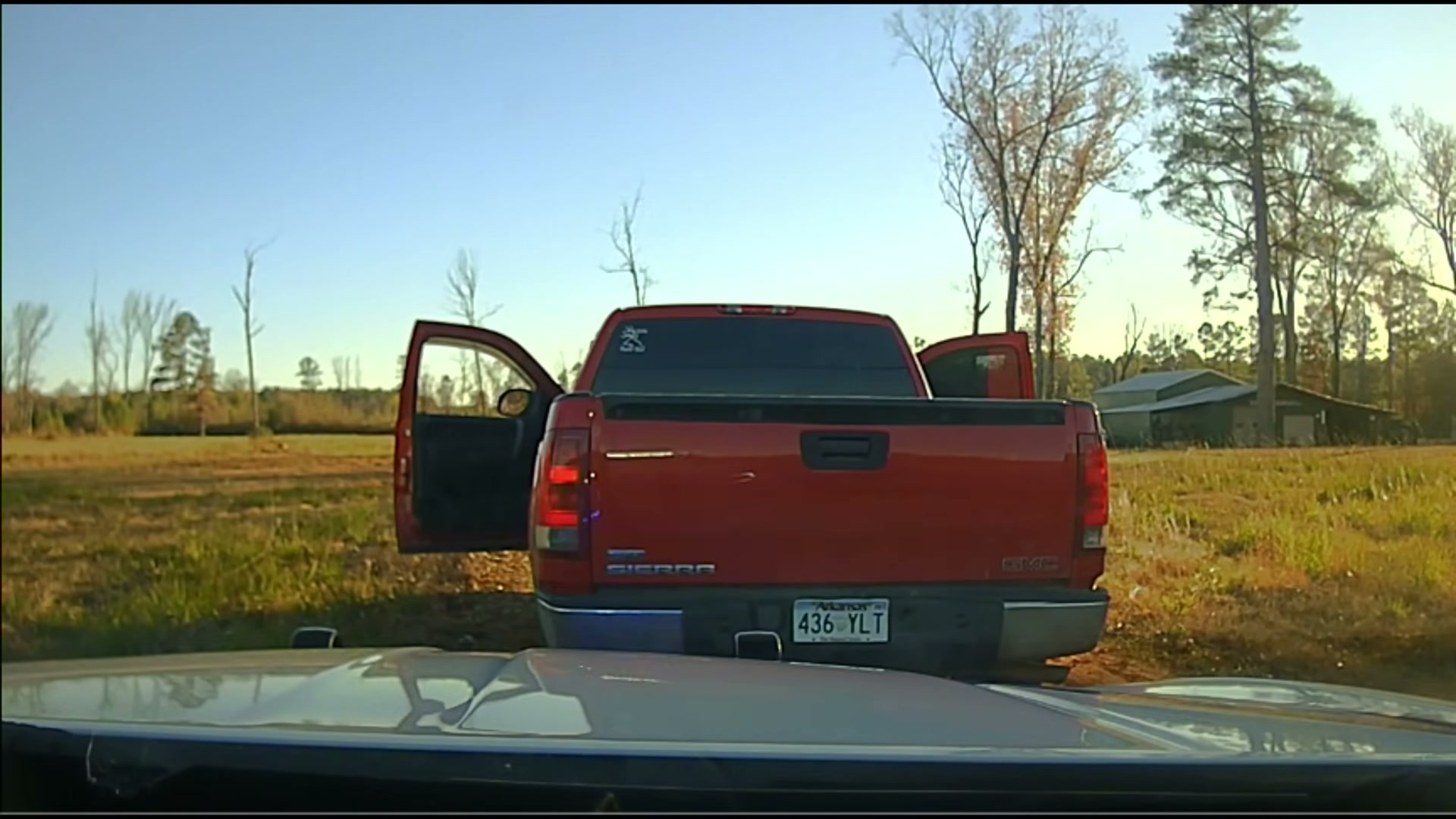
    Dashcam view of Amanda Prince's red GMC Sierra with both doors open during the December 17, 2023 traffic stop
    Prince’s truck, doors open, mid-search. Arkansas State Police dashcam, Dec. 17, 2023 (released footage).

    Minute seventeen

    Here’s what Prince’s federal lawsuit says the camera footage shows, per the Arkansas Times: at about the 16:52 mark of the recording, a trooper opens the front passenger door of the cruiser and tosses an object inside. Prince is handcuffed in the back. At the jail, the suit alleges, Morphis had her stand in front of the car, reached into that front floorboard while grabbing a rubber glove, then went into the back seat and “discovered” a bag of cocaine where she had been sitting.

    Prince, to reporters: “When we get to the jail and he pulls out this bag of cocaine, I’m like caught off guard, like that’s definitely not mine.” She asked for the bag to be fingerprinted and DNA-tested. Per the Arkansas Times, Morphis declined.

    His arrest paperwork told a different story. The affidavit described Prince moving erratically in the back seat, digging at her waistline — the picture of a suspect ditching her stash. Hold that thought, because the people who eventually checked it against the video were his own agency.

    Trooper Christian Morphis standing between his dashcam and Amanda Prince's truck during the stop
    Morphis, standing between his own dashcam and her truck. The camera he forgot about is the one taking this picture. ASP dashcam, Dec. 17, 2023.

    The trial

    September 2024: a Drew County jury hears the case — the trooper’s account on one side, a woman insisting the drugs weren’t hers on the other — and acquits her of the felony. Worth noting, per the Arkansas Times: the planting allegation hadn’t even surfaced yet at trial. The jury didn’t need it. The state’s star witness was a state trooper testifying under oath, and twelve Arkansans listened and said no.

    Think about how rarely that happens. Juries trust cops. It’s practically the house edge of the criminal justice system. This jury heard this cop and walked her.

    What nine months of innocence cost her

    Acquittal is not a refund. Between the arrest and the verdict, per the Arkansas Times and Little Rock Public Radio:

    She posted a $5,000 bond. Her truck — a gift from her late father, legally tagged and insured, parked a quarter mile from her house — was impounded anyway after Morphis refused to let anyone come get it. The impound fees outran what she could pay, so the truck was gone for good. While she waited for trial she lost her home and her belongings. She was, for a stretch, homeless. For a traffic stop over a suspended license.

    That’s the machine working exactly as designed on the citizen side: full price, paid up front, no verdict required.

    “Impossible” is a strong word. Investigators used it.

    October 2024, a month after the acquittal, Prince filed a citizen complaint alleging perjury and fabrication of evidence. The internal investigation that followed concluded, per Little Rock Public Radio:

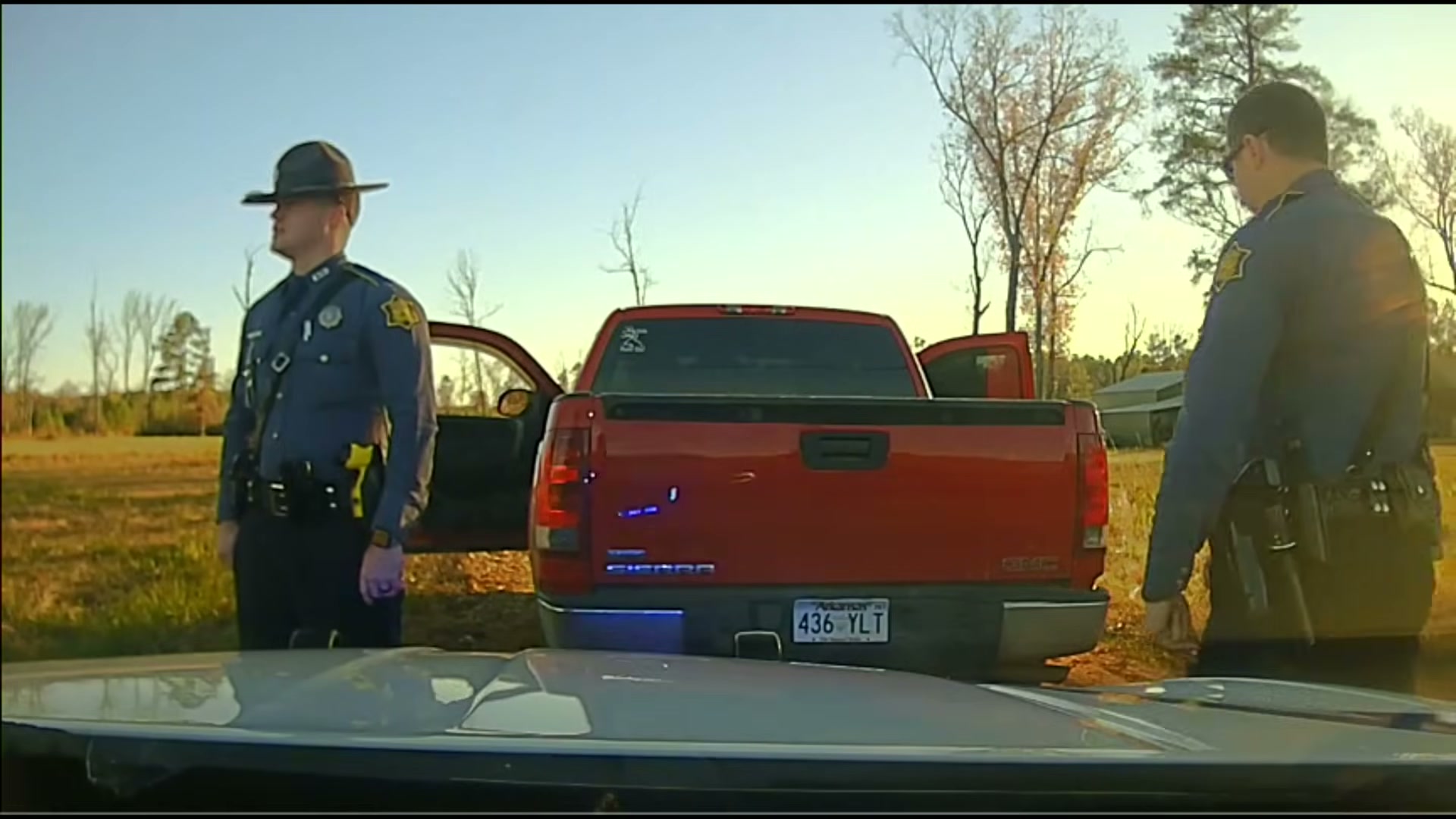
    A second trooper joins the search of Amanda Prince's truck while Morphis stands by his cruiser
    A second trooper joins the truck search. The search that never properly happened was the pat-down of Prince herself — the hole the whole story fell through. ASP dashcam, Dec. 17, 2023.

    The story in his report was physically impossible — Prince was handcuffed, stationary, and wearing pants too tight to have dug a bag out of them unnoticed. The surveillance video showed her sitting still except for brief head movements, not “moving erratically.” He falsified official documentation. And he never properly patted her down before putting her in the cruiser — which was the procedural fig leaf the whole “it came from her pocket” story depended on.

    In January 2025, Arkansas State Police fired him. Read the stated grounds closely, per the Arkansas Times: policy violations — inaccurate statements, failure to search a prisoner. The termination letter never mentions planted drugs. A man whose own agency concluded his sworn account was fiction got the bureaucratic equivalent of a parking ticket: cleaned out his locker and went home.

    On June 11, 2026, the Arkansas Commission on Law Enforcement Standards and Training voted unanimously to decertify him, per Little Rock Public Radio. He can never carry a badge in Arkansas again. That’s the ceiling of what the system has done to Christian Morphis, and it took two and a half years to get there.

    Watch him explain himself

    Don’t take my word for any of this — or theirs. The released footage and Morphis’s recorded interview are public, and the breakdown below walks through the interrogation where he gets to account for the report his own agency later called fiction. Pour something and watch his answers.

    “Cop Plants Cocaine to Frame Innocent Woman — Gets Interrogated (part 2)” — watch on YouTube.

    “Zero evidence,” says the agency holding the tape

    And here’s the part that should curl your drink. In December 2025 — nearly a year after they fired him over the inaccurate report — Arkansas State Police told THV11, per the Arkansas Times: “The allegations made by Ms. Prince, however, are erroneous and irresponsible. There is zero evidence to support allegations that this Trooper ‘planted drugs.’”

    Erroneous and irresponsible. About the woman their own investigators effectively vindicated. Per the Arkansas Times, Prince’s attorney Mike Laux says the internal investigation never directly asked Morphis whether he planted the drugs, and never interviewed Prince at all. You will find zero evidence in a lot of places if you’re careful about where you don’t look.

    The lawsuit

    On May 22, 2026, Prince filed a federal civil-rights lawsuit, assigned to Judge D. Price Marshall Jr., per the Arkansas Times and Little Rock Public Radio. The defendants: Morphis; Mike Hagar, the state’s top cop; and Marcus Daniels, the trooper who ran that internal investigation. The suit seeks damages for the financial and emotional wreckage.

    Laux, who’s done civil-rights work for over twenty years, per the Arkansas Times: “I haven’t seen a more egregious example in all of my years of doing police misconduct cases in Arkansas, in Chicago, in Texas, in Kentucky, in Oklahoma, all over the place. I have never seen a more brazen act of police misconduct.”

    The scoreboard

    Run the two ledgers side by side.

    Amanda Prince, guilty of driving on a suspended license: a felony prosecution, a $5,000 bond, her dead father’s truck, her home, her belongings, months of homelessness, and nine months under threat of prison — acquitted, and still out everything but the verdict.

    Christian Morphis, found by his own agency to have filed a fictional report about an impossible crime: fired with a letter that politely omits the worst of it, decertified a year and a half later, and — as of everything on the public record — never arrested, never charged, never cuffed in the back of anybody’s cruiser.

    Filing a false police report is a crime in Arkansas. Perjury is a crime in Arkansas. Planting evidence — if a jury ever gets to decide that question the way one decided Amanda Prince’s — is a crime everywhere. The citizen complaint said perjury and fabrication in October 2024. It’s October 2026. Where the fuck is his trial?

    Because here’s what the back of that cruiser actually held, and no evidence bag was ever needed: proof that the system bills the innocent in advance and invoices the badge never. A jury saved Amanda Prince. Nobody’s even tried to prosecute the man who made that necessary.

    Sources: Arkansas Times; Little Rock Public Radio (on the lawsuit and on the decertification). The planting allegation is Prince’s, made in her federal complaint; Morphis has not been criminally charged, and Arkansas State Police deny the drugs were planted.

  • Sept 29, 2026: Sen. Eric Schmitt’s Six-Hour VP Audition — Just the Facts

    Sept 29, 2026: Sen. Eric Schmitt’s Six-Hour VP Audition — Just the Facts

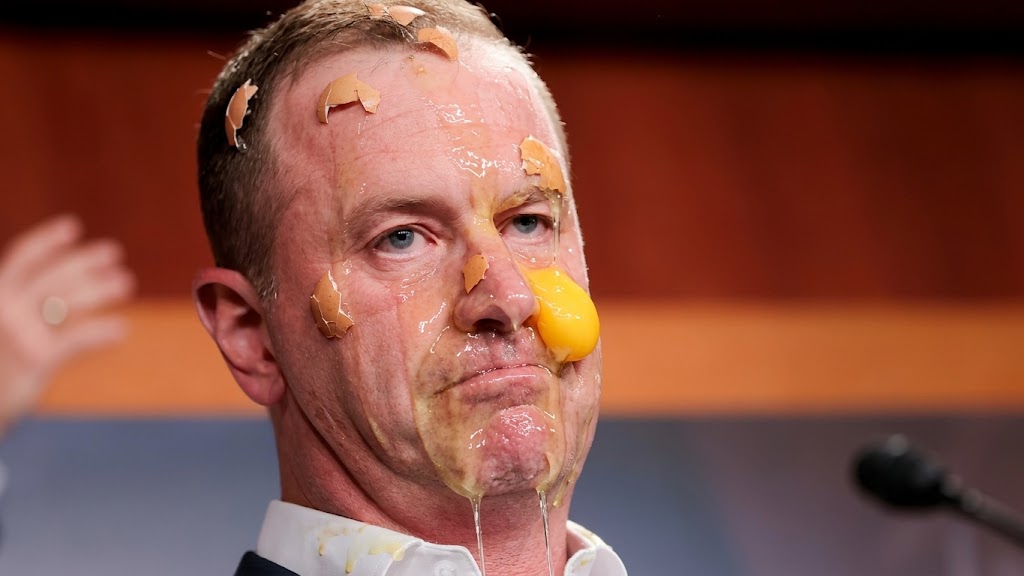
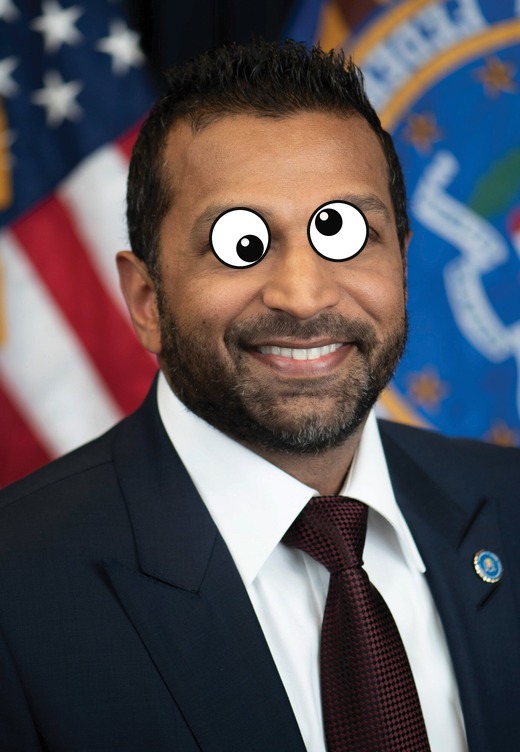
    Above: Sen. Eric Schmitt (R-Mo.). Sen. Dirtbag? You decide. (Photo illustration: the egg is ours.)

    This timeline is about Sen. Eric Schmitt, Republican of Missouri: the morning he was floated as a 2028 running mate for Vice President JD Vance, and the hearing where he accused former special counsel Jack Smith of perjury over an Atlanta Hawks game.

    A timeline of September 29, 2026, assembled from the reporting linked below. Facts only — draw your own conclusions.

    ~6:00 AM

    Axios publishes a profile of Sen. Eric Schmitt (R-Mo.), reporting he “has grown close to Vice President Vance and is seen as a top prospect to become a potential 2028 running mate,” and that Vance views him as “trustworthy, intelligent, articulate and a deft political operator.” The piece is bylined by Axios co-founder and CEO Jim VandeHei.

    Later that morning — Senate Judiciary Committee

    Former special counsel Jack Smith testifies. Schmitt tells Smith: “What would you say if I had a series of text messages from your team that said you were in Atlanta at a Hawks game?” — presenting it as evidence Smith traveled to Atlanta in February 2024 and, by implication, met with Fulton County DA Fani Willis. Schmitt frames the alleged trip as grounds for a perjury accusation. (NBC News, Washington Post)

    Minutes later

    Smith responds that he did not attend an Atlanta Hawks NBA game: he attended a University of Iowa Hawkeyes women’s basketball game — played in Maryland, against the University of Maryland — because Caitlin Clark was playing. (CNN, Slate)

    During and after the exchange

    Per Mediaite’s accounting: Sean Hannity posts the exchange quote on X — and later deletes the post. Rich Sementa, producer of The Mark Levin Show, posts praise for Schmitt’s moment — and later deletes it. Benny Johnson posts that Schmitt “CAUGHT Jack Smith perjuring himself,” referring to “a Warriors Hawks game.” Accounts including Sidney Powell, Tony Shaffer, and Charlie Kirk’s show push the same narrative. Rolling Stone documents MAGA media continuing to cover the moment as a win after the claim collapsed.

    On the record

    Sen. Amy Klobuchar (D-Minn.) says Schmitt, “working from clearly wrong information,” owes Smith an apology. (Missouri Independent)

    The aftermath

    The Washington Examiner’s opinion desk headlines it: “Eric Schmitt’s shadow campaign for the vice presidency lasted six hours.” The Hill reports Schmitt facing fallout; the Daily Beast reports a follow-up attempt rather than a retraction.

    Worth stating plainly

    • Speculation circulated that the Axios story was placed by Schmitt’s team ahead of an expected hearing moment, and that talking points were pre-seeded to commentators. No outlet has established either claim. (Daily Beast)
    • As of October 2, 2026, no public apology from Sen. Schmitt to Jack Smith has been reported.
  • He’s a Convicted Felon. So Where the Fuck Is the Cell?

    This morning I asked why the fuck we’re putting up with Trump. The first question back was the obvious one. He’s a convicted felon, so there have to be consequences, right? Where’s the jail? If the laws in that post were enforced on him the way they get enforced on you, what would he get?

    On paper, a lot of years. In practice, zero days, and every one of those zero days has a reason. This post is the reasons.

    Same rules as last time. If something is verified by several outlets, I state it flat. If it’s one outlet’s reporting, I name the outlet. If it’s an allegation, I tell you whose. If nobody knows, I say that. This one needs one more. A statutory maximum is the most a judge may impose after a conviction, not a prediction; first offenders rarely get the top number. Apart from the one case a jury has already decided, nothing below is a charge against Trump or anyone else. It’s what the statute says, who says it fits, and who has actually done the time.

    34 felonies, zero days

    On 30 May 2024 a Manhattan jury convicted Donald Trump on all 34 counts of first-degree falsifying business records, a class E felony under New York Penal Law §175.10. Each count carries up to four years. Stack all 34 and you get 136 years on paper, but New York’s §70.30 caps consecutive terms like these at 20. Twenty years was the legal ceiling. Commentators treated four as the realistic one.

    On 10 January 2025 he was sentenced by video from Mar-a-Lago. The hearing took, per AP, “little more than half an hour.” The sentence was an unconditional discharge: no jail, no fine, no probation. The conviction stands. Even the prosecution asked for that sentence, given the calendar. Judge Merchan said the protections of the office “do not reduce the seriousness of the crime,” and that “one power they do not provide is the power to erase a jury verdict.” Then he said: “Sir, I wish you Godspeed as you assume your second term in office.”

    The only money Trump has paid in any criminal case is $10,000 in contempt fines for violating the gag order in his own trial ten times. He was warned about jail and never jailed.

    Michael Cohen pleaded guilty in 2018 to eight counts, including campaign-finance crimes over the same hush-money payments. Prosecutors said he acted “in coordination with and at the direction of” Trump. He got three years, a $50,000 fine, $1.4 million in restitution and $500,000 in forfeiture, and he was disbarred. He spent about 13 months in prison and roughly 30 months in custody in all.

    Allen Weisselberg, the Trump Organization’s CFO, went to Rikers twice, five months each time. His first plea, in 2022, included falsifying business records, the same crime Trump was later convicted of. The Trump Organization itself was convicted on 17 counts in December 2022 and fined about $1.6 million.

    The fixer did prison, the CFO did Rikers, and the company paid. The man at the top got Godspeed.

    Then there’s what a felony costs everyone else afterward. About 4 million Americans can’t vote because of one. Trump can, because New York only bars voting while you’re in prison. A felon caught with a gun faces up to 15 years. Prison or probation can cost you your passport, per AP; he travels on a diplomatic one. And nothing in federal law stops a felon from becoming president.

    The conviction is on appeal in state court. On 28 August, Judge Hellerstein refused for a third time to move the case into federal court, per NBC New York, Axios and CNBC, and Trump appealed to the Second Circuit within hours. A presidential pardon cannot touch this conviction. Only New York’s governor can.

    The four walls

    Everything else in part one runs into at least one of four walls.

    Wall one: immunity. In Trump v. United States the Court held that a president is “absolutely immune” for acts within his “conclusive and preclusive constitutional authority,” and has “at least presumptive immunity” for all his official acts. Roberts added: “The President enjoys no immunity for his unofficial acts.” Then comes the part people miss. Even in a case about unofficial acts, prosecutors can’t use “testimony or private records of the President or his advisers” probing an official act. Justice Sotomayor laid it out in dissent: “Orders the Navy’s Seal Team 6 to assassinate a political rival? Immune. Organizes a military coup to hold onto power? Immune. Takes a bribe in exchange for a pardon? Immune. Immune, immune, immune.”

    Wall two: DOJ policy. A 2000 Office of Legal Counsel opinion says indicting a sitting president “would unconstitutionally undermine” the executive branch. No federal charge until he’s out.

    Wall three: who prosecutes. The Attorney General is Todd Blanche, Trump’s former criminal defense lawyer, confirmed 50–49 in August. NOTUS reports that the Public Integrity Section, the unit that prosecutes corrupt officials, went from 36 lawyers to 2.

    Wall four: the pardon. It covers every federal offense, criminal contempt included. Can he pardon himself? DOJ’s own 1974 memo says no: “no one may be a judge in his own case.” No court has ever ruled on it.

    The sentence sheet

    Ten acts from part one. For each: who says which law it touches, the maximum checked against the statute text, who actually did time for the same kind of thing, and why none of it has reached him.

    1. The hush-money records (a jury convicted him)
    The law: NY Penal Law §175.10. Up to 4 years a count, 34 counts, capped at 20 years total.
    Who did time: Cohen, 3 years federal. Weisselberg, 5 months on Rikers on a plea that included falsifying business records.
    Why not him: Nothing stopped the conviction. The judge gave him an unconditional discharge because of the office he was about to take.

    2. The 2020 election scheme (charged by Jack Smith)
    The law: 18 USC §1512(c) obstruction, 20 years. §241 conspiracy against rights, 10. §371 conspiracy, 5.
    Who did time: Over the same January 6 attack, Proud Boys leader Enrique Tarrio got 22 years and Oath Keepers leader Stewart Rhodes got 18, both for seditious conspiracy.
    Why not him: Dismissed under the sitting-president policy. The five-year clock ran out around January 2026. On day one he pardoned Tarrio and commuted Rhodes.

    3. The classified documents (charged by Jack Smith)
    The law: 18 USC §793(e), 10 years a count, 32 counts. §1512(c), 20.
    Who did time: Jack Teixeira, 15 years for six Espionage Act counts.
    Why not him: Judge Cannon dismissed the case, DOJ dropped the appeal, and Cannon blocked release of Smith’s report on it. The clock runs out around mid-2027, while he’s still in office.

    4. Defying court orders (AP: judges found violations in at least 31 lawsuits; Judge Boasberg found probable cause for criminal contempt)
    The law: 18 USC §401 criminal contempt. No fixed cap, but anything over 6 months needs a jury.
    Who did time: Chelsea Manning, about a year jailed for civil contempt plus $256,000 in fines, for refusing to testify to a grand jury. Bannon and Navarro, 4 months each for contempt of Congress.
    Why not him: Criminal contempt is pardonable, and he already pardoned Joe Arpaio for it in 2017. Boasberg’s inquiry is pending (see the corrections at the bottom).

    5. Troops in LA (Judge Breyer: a “serious violation of the Posse Comitatus Act”)
    The law: 18 USC §1385, 2 years.
    Who did time: Nobody. I can’t find one criminal prosecution in the Act’s 148 years.
    Why not him: Commanding troops sits about as close to “core” power as it gets, on my read. And no prosecutor has ever tried it.

    6. The boat “double tap” and Minab (a UN mission found “reasonable grounds” of a US war crime at Minab; TIME on the boat, below)
    The law: War Crimes Act, 18 USC §2441. Life, or death if death results.
    Who did time: Lt. Clint Lorance, 19 years, court-martialed for the unpremeditated murder of two Afghan men. Blackwater guard Nicholas Slatten, life. Trump pardoned both.
    Why not him: Ordering strikes is almost certainly core commander-in-chief power, so immune. For everyone else, no case moves without the written sign-off of the Attorney General, his deputy or an assistant AG (§2441(f)).

    7. The oil bets and the trades (DOJ and the CFTC opened a probe into $2.6 billion in oil bets)
    The law: Commodity Exchange Act, 7 USC §13(a), 10 years and $1 million. Securities and commodities fraud, §1348, 25 years.
    Who did time: Raj Rajaratnam, 11 years. Rep. Chris Collins, 26 months. Rep. Steve Buyer, 22 months.
    Why not him: Nobody has been named or charged over the oil bets, and no trade has been tied to Trump. He pardoned Collins about two months into his sentence and Buyer in June 2026.

    8. Pay-to-play: the CZ pardon, the crypto, the UAE stake (alleged by Senate Democrats and Rep. Raskin; Binance and Zhao’s lawyers deny any link)
    The law: Bribery, 18 USC §201(b). Up to 15 years, a fine of up to three times the bribe or $250,000, whichever is greater, and a court may bar you from federal office.
    Who did time: Sen. Bob Menendez, 11 years for gold bars, cash and acting as Egypt’s agent.
    Why not him: The pardon power is “conclusive and preclusive,” the Court’s own words. The federal conflict-of-interest law exempts the president by definition. And when Rep. Henry Cuellar was charged with taking about $600,000 in bribes from an Azerbaijani oil company and a Mexican bank, Trump pardoned him before trial.

    9. The Qatar 747
    The law: Foreign Gifts and Decorations Act. No criminal penalty. The only remedy is a civil suit by the Attorney General for the gift’s value plus $5,000, and even that is contested, because the Pentagon accepted the plane.
    Who did time: Nobody. There’s no crime to do time for.

    10. Impoundment, the IG firings, the Hatch Act (found unlawful by GAO and courts)
    The law: No criminal penalty at all. The Hatch Act exempts “the President and the Vice President” by name.
    Who did time: Nobody. The law has no teeth.

    Add up the “why not him” lines. About half of what courts and GAO found carries no criminal penalty. The rest hits immunity, DOJ policy, a DOJ he staffed, or a pardon. The one conviction that got past all four walls produced a sentence of nothing.

    An honest footnote on number 6: the military rarely prosecutes killings it calls mistakes, under either party. After a 2021 Kabul drone strike killed 10 civilians, 7 of them children, Biden’s Defense Secretary disciplined nobody. What’s different now is the two cases on this sheet where Americans actually got long sentences for killing civilians. Both ended in pardons from the man now at the top of the chain. I can find no discipline of anyone over Minab, and the Pentagon’s probe is still unreleased.

    The cronies don’t get immunity. They get pardons.

    Trump v. United States protects one man. It says nothing about aides, cabinet secretaries or co-conspirators. Sotomayor’s SEAL Team 6 hit and coup both need somebody else to carry them out, and the ruling immunizes none of them.

    That doesn’t leave them naked. Federal officers still have a public-authority defense. Under In re Neagle they also have Supremacy Clause immunity against state prosecution for acts within their federal duties. On war crimes they have the §2441(f) gate: the case goes nowhere unless the Attorney General, his deputy or an assistant AG signs off in writing, and all of them answer to Blanche. Their real shields are a pardon and control of DOJ.

    The boat strike. On 2 September 2025 a follow-up strike killed two survivors clinging to the wreckage. The Washington Post reported that Hegseth gave a “kill everybody” order. Adm. Frank Bradley told lawmakers, per Sen. Tom Cotton, that there was no order “to give no quarter or to kill them all.” Whether that order was given is disputed. What the statute says is not. The War Crimes Act defines murder to include intentionally killing people “placed out of combat by sickness, wounds, detention, or any other cause.” TIME called the strike an attack on “injured and shipwrecked people—a clear breach of the laws of war and of U.S. law.” Republican Sen. Thom Tillis told PBS: “Anybody in the chain of command that was responsible for it, that had vision of it, needs to be held accountable.” I can find no probe, no referral and no charge. The only people ever charged under §2441 are four Russian soldiers, in 2023, and they’ve never been arrested.

    The traders. The Commodity Exchange Act does reach White House and Pentagon insiders. Dodd-Frank’s “Eddie Murphy rule,” 7 USC §6c(a)(4), bars any federal employee or agent from trading commodities on nonpublic government information. A willful violation is a felony carrying 10 years and $1 million. The one White House staffer sanctioned so far is a teleprompter operator who, the CFTC says, bet on Kalshi using advance copies of presidential speeches: about $172,000 and a three-year trading ban, civil only. The one American criminally charged with betting on military secrets is a soldier. DOJ says Gannon Van Dyke turned about $33,000 in Polymarket bets on the Maduro raid into about $410,000. He has pleaded not guilty, has moved to dismiss, and trial is set for 7 December. Trump’s take, per ABC: “The whole world unfortunately has become somewhat of a casino.” Nobody has been named over the $2.6 billion in oil bets.

    Don Jr. He holds no office, so no immunity applies to him at all. But no outlet or expert has named a statute he broke by letting a Putin-decorated oligarch pay for his wedding party, and I’m not going to invent one. What’s on the record is the Attorney General’s response: “Am I investigating what?”

    The pardon, already in use. On 7 November 2025 Trump signed a proclamation pardoning 77 named allies from the 2020 elector scheme, including Giuliani, Meadows, Eastman and Powell. It also pardoned “all United States citizens” for the same conduct. One line reads: “This pardon does not apply to the President of the United States, Donald J. Trump.” By DOJ’s 1974 memo, he couldn’t have covered himself anyway. Now look at his first-term record: 237 clemency grants, 84% of them in his last year, and about 140 on the final night. The pattern points at January 2029.

    The limit is the states. A president can only pardon “offenses against the United States.” Steve Bannon is the proof. Trump pardoned his federal “We Build the Wall” fraud charges in 2021. Manhattan charged the same scheme under state law, and Bannon pleaded guilty in February 2025. He got a conditional discharge, but the conviction stuck. And in Georgia v. Meadows, the federal appeals court over Georgia held that a former federal officer can’t move a state prosecution into federal court. Georgia, the big one, is dead. It was dismissed last November, after four co-defendants had already pleaded guilty and taken probation. Arizona’s fake-elector case kept going after the pardon, but I can’t confirm where it stands today.

    The clock

    The default federal statute of limitations is five years. Securities fraud gets six, tax evasion six, and wire fraud that hits a bank ten. His term ends 20 January 2029, so a 2025 act goes stale in 2030 and a 2026 act in 2031. For a five-year crime, that leaves a future DOJ somewhere between one and five years after he leaves, depending on when the act happened.

    Some rough dates:

    — The $TRUMP coin launched 17 January 2025, three days before he took office, when he was a private citizen with no immunity. Devon Ombres of the Center for American Progress has pointed to the coin as the kind of unofficial conduct the immunity ruling leaves open. Nobody has charged anything. If anyone ever did, the five-year clock runs to January 2030.

    — The CZ pardon was 21 October 2025. Nobody has alleged bribery in a court, and Binance and Zhao’s lawyers deny any link. If anyone ever charged it that way, the clock runs to October 2030. It would also test whether bribery tied to an immune pardon can be prosecuted at all.

    — The spring 2026 oil bets, if anyone is ever named: 2031, or 2032 under the six-year securities clock.

    — The boat strike: never.

    That last one comes from §2441(e). A war crime under Common Article 3 “may be found … at any time without limitation,” whether or not anyone died. Common Article 3 covers armed conflicts “not of an international character.” In October 2025 the administration told Congress it is in a “non-international armed conflict” with the cartels. My reading, not a court’s: by its own legal theory, the boat campaign is conduct that never goes stale.

    No statute pauses the clock while a president sits. DOJ’s 2000 opinion admitted the problem and promised: “At most, therefore, prosecution would be delayed rather than denied.” The January 6 conduct passed its five-year mark around January 2026. The documents case expires around mid-2027, about 18 months before he leaves. Delayed became denied.

    One more small cruelty. 18 USC §3287 pauses the clock on fraud against the government “when the United States is at war or Congress has enacted a specific authorization for the use of the Armed Forces.” Congress never declared or authorized this war. So on my reading, and it’s arguable because the statute never defines “at war,” the failure I wrote about this morning may also switch off the longer clock for war profiteering.

    Jack Smith, under oath on 17 December 2025: “Our investigation developed proof beyond a reasonable doubt that President Trump engaged in a criminal scheme to overturn the results of the 2020 election and to prevent the lawful transfer of power.” His report says the case died because of the sitting-president policy, not the evidence, which “was sufficient to obtain and sustain a conviction at trial.” In the deposition he said he would prosecute a former president on the same facts today, “regardless of whether that President was a Republican or a Democrat.” That case is past its clock now.

    Other countries lock theirs up

    The usual line is that nobody does this. Plenty of countries do.

    France. Nicolas Sarkozy was convicted in September 2025 of criminal conspiracy in the Libyan-financing case and sentenced to five years. On 21 October he walked into La Santé prison, the first former French president behind bars. He was out after about 20 days pending appeal. Prosecutors have asked the appeals court for seven years, and the verdict is expected 30 November.

    Brazil. Jair Bolsonaro got 27 years and 3 months for an attempted coup, final since November 2025. Generals and an admiral were convicted with him, one of them his own running mate. He served in a federal police cell and then a prison complex. As of the latest reporting I can find, he’s on temporary humanitarian house arrest with an ankle monitor after a hospitalization. When the US leaned on the court with sanctions and visa threats during the trial, Justice Flávio Dino asked whether anyone thought “a credit card or Mickey are going to change the ruling.”

    South Korea. Yoon Suk Yeol, who declared martial law in December 2024, was sentenced in February 2026 to life for leading an insurrection, after prosecutors asked for death. His defense minister got 30 years. Two of his predecessors, Park Geun-hye and Lee Myung-bak, did prison time for corruption. Yoon himself pardoned Lee in 2022. Now Yoon is the one in a cell with a life sentence.

    Israel. Ehud Olmert served 16 months for bribery, the first former Israeli prime minister in a cell. Netanyahu is on trial right now. Trump publicly demanded his trial be “CANCELLED, IMMEDIATELY” and wrote to Israel’s president asking for a pardon. When Trump weighs in on another democracy’s courts, it’s for the defendant.

    Peru sentenced four ex-presidents in 2024 and 2025, including Alejandro Toledo, 20½ years for $35 million in bribes. The United States extradited him. We’ll ship another country’s former president home to prison. Ours got 34 felonies and not even a fine.

    The US record: zero presidents ever sentenced to jail. Ford pardoned Nixon before any charge was filed, and his approval rating fell from 71% to 50%. The only president ever convicted got Godspeed. Other countries aren’t braver than us. They made a different choice, and we’re still making ours.

    So where’s the jail?

    It exists in three places. It exists on paper, on the sheet above, in statutes nobody wrote as a joke. It exists abroad, in the cells that held Sarkozy, Bolsonaro and Yoon. And a piece of it exists in New York, in a felony conviction no president can pardon, sitting on appeal with his name on it.

    Here it waits on gavels and elections, same as everything in part one. A few things are true and worth acting on:

    — DOJ’s own lawyers wrote that “Congress could overcome” the clock problem “by imposing its own tolling rule.” Congress can extend a limitation period that hasn’t expired yet. Once it expires, Congress can’t revive it. The documents case runs out around mid-2027. The Congress elected on 3 November takes its seats in January 2027, so it would have months, not years, and the bill would still have to get past his veto.

    — State prosecutors are the only ones no pardon can stop. You elect most of them.

    — The war-crime clock never runs out. The gate on it belongs to whoever is Attorney General, and the president picks the Attorney General. In the end every line on that sheet depends on who wins elections.

    The midterms are 3 November. The next presidential election is in 2028, and if the pattern holds, the pardons come the following January. The laws exist. The cells exist; ask Sarkozy. What’s missing is people in office willing to enforce those laws on everybody, him included. Same ending as this morning: be one of the bodies. Go.

    Corrections to part one

    Three updates, same rules. First, Boasberg’s contempt inquiry. I wrote that an appeals panel shut it down 2–1. That was true in April. On 22 June, per Wikipedia’s summary of the case, the full D.C. Circuit agreed to rehear the case en banc and vacated the panel ruling. That revived the inquiry, and it’s pending. Second, I called Van Dyke a master sergeant. DOJ’s release gives no rank, only “active-duty soldier” at Fort Bragg. Third, I wrote that the Posse Comitatus ruling was “stayed on appeal.” The stay was administrative. Breyer later ordered the troops out, the Ninth Circuit backed him, and the LA deployment ended on 31 December 2025.

    Sources

    Part one — Why the Fuck Are We Putting Up With Trump?

    AP — Excerpts from Trump’s hush-money sentencing

    NY Penal Law §70.30 — the 20-year aggregate cap

    CNBC — Michael Cohen sentenced to 3 years

    AP — What rights Trump loses as a felon

    Sentencing Project — Four million denied the vote

    NBC New York — Hellerstein denies removal a third time

    Supreme Court — Trump v. United States (2024)

    DOJ OLC — A Sitting President’s Amenability to Indictment (2000)

    DOJ OLC — Presidential self-pardon memo (1974)

    18 USC §2441 — War Crimes Act

    TIME — Timeline of the boat-strike survivors’ killing

    PBS NewsHour — Adm. Bradley and the double-tap strike

    CFTC — White House teleprompter operator sanctioned

    DOJ — Soldier charged over prediction-market bets

    DOJ — Proclamation pardoning 2020 elector-scheme participants

    11th Circuit — Georgia v. Meadows

    DOJ — Special Counsel Smith report, Volume 1

    House Judiciary — Jack Smith deposition transcript

    BBC — Sarkozy becomes France’s first ex-president behind bars

  • Why the Fuck Are We Putting Up With Trump?

    Part two is now up: He’s a Convicted Felon. So Where the Fuck Is the Cell?

    Day 209. That’s where we are, as I write this on 24 September 2026, in the war with Iran. Congress never declared it. Congress never authorized it. Congress did vote, in both chambers, to tell the president to stop. He kept going, and the people whose job it is to do something about that shrugged.

    So the question isn’t “is Trump bad.” You settled that for yourself years ago. The question is mechanical: how is a president allowed to take this country to war without asking, and why is every brake we built for exactly this situation failing at the same time? Once you watch a man start a war and pay nothing for it, the rest makes sense: the ballroom, the pool, the Kennedy Center, the arch, the oligarch-funded wedding party, the crypto, the trades, the lies.

    Same rules as last time. If something is verified by several outlets, I state it flat. If it’s one outlet’s reporting, I name the outlet. If it’s an allegation, I tell you whose. If nobody knows, I say that. I didn’t have to add anger to any of this. It’s already in the record.

    The war nobody declared

    On 28 February 2026 the United States and Israel launched Operation Epic Fury against Iran. Supreme Leader Ali Khamenei was killed in the joint opening strikes. NPR and the IDF say the strike that killed him was Israeli, but it was part of an attack Trump chose to launch. There was no declaration of war and no AUMF. The only Iran authorization anyone even filed, a Republican’s limited one, showed up in May, more than two months into the shooting, and went nowhere.

    The legal basis, per the White House’s own War Powers report, was the president’s “constitutional authority as Commander in Chief and Chief Executive.” That’s it. The whole theory is Article II and a shrug.

    Trump said it would take “four weeks — or less.” It is month seven. The Pentagon’s official count of American dead is 19 as of 22 September, and officials told the Washington Post the real number is 22 or 23. The human rights group HRANA counts 3,636 Iranians dead, 1,701 of them civilians. The Pentagon puts the bill at about $44 billion. Gas hit a record $4.56 national average in May. The ceasefire collapsed in July, and the blockade is still on.

    Then there’s Minab. On day one, a strike hit the Shajareh Tayyebeh girls’ elementary school. A preliminary Pentagon inquiry found a US missile likely hit it and blamed stale targeting data. Iranian officials put the dead above 150, about 120 of them children. Those are Iran’s figures. Trump first blamed Iran and claimed Iran had Tomahawks. Iran isn’t on the list of countries allowed to buy one. On 17–18 September a UN fact-finding mission found “reasonable grounds” that the US committed a war crime there. It also found the school was struck more than once, which is evidence it was the intended target and not a stray. The White House’s reply was that the UN Human Rights Council spouts “unserious nonsense.”

    Since September 2025 the military has been blowing up boats it says are running drugs. At least 230 people have been killed in roughly 70 strikes. No public evidence has been offered that any particular boat carried drugs. In the first strike, a follow-up hit killed two survivors clinging to the wreckage. On 3 January, Operation Absolute Resolve snatched Nicolás Maduro out of Caracas; 32 Cubans were among the dead. The Justice Department’s own legal memo said the raid “does not rise to the level of war in a constitutional sense.” The Senate tried to leash it, and the resolution died 51–50 when JD Vance broke the tie.

    In June, Axios asked Trump what limits the war had taught him. “There are no limits.”

    So far he’s been right. That’s the whole fucking problem.

    Why the War Powers Act is a dead letter

    Article I gives Congress the war power. The 1973 War Powers Resolution was written to stop exactly this: the president reports within 48 hours and pulls out within 60 days unless Congress signs off.

    Day 60 was 1 May. That day Trump told Congress that “the hostilities that began on February 28, 2026, have terminated,” because of an April ceasefire, while the Navy was blockading Iranian ports. Senate Democrats say a secret Justice Department opinion dated that same day backs him up. Thirty-eight of them have demanded to see it, and as far as I can find, it has never been released. When the fighting resumed, Trump wrote on 10 July that military action had “formally restarted,” which amounts to claiming a fresh 60 days. Republican Rep. Thomas Massie: “They’re literally trying to steer around it by pretending you can play stop-start and restart the clock.”

    Congress did try. In March the House failed 212–219. On 3 June it passed a concurrent resolution ordering withdrawal, 215–208, and on 23 June the Senate adopted it 50–48 with Republicans Collins, Murkowski, Paul and Cassidy voting yes. It was the first concurrent war-powers resolution ever to clear both chambers. Trump called it “meaningless.” The next day he went after GOP senators at a Capitol lunch and called Cassidy a “lunatic.” Cassidy told him the war “was supposed to last four weeks. It’s lasted four months.” Then Vance and Witkoff gave a briefing, Cassidy switched to no, Paul voted present, and the Senate blocked a separate binding measure 47–50–1. The House has passed Iran resolutions twice more since: 214–208 in July and 220–204 in September, with seven Republicans in the second. By the end of July, Democracy Now counted 13 Senate votes this year on ending the war. The only resolution that passed was the one with no teeth.

    None of it stops anything, because there are four trapdoors.

    The cheap tool doesn’t bite. A concurrent resolution never goes to the president. The statute says it binds, but since INS v. Chadha (1983) it has been widely considered unenforceable, and the White House said it had “no force of law” and ignored it.

    The real tool needs a supermajority. A joint resolution can be vetoed, and overriding takes two-thirds of both chambers. No war-powers resolution has ever survived a veto. The last attempt was over Soleimani in 2020, and the override died 49–44.

    The courts won’t touch it. Suits by individual lawmakers get dismissed on standing and “political question” grounds, as they did over Kosovo and Libya. Reps. Larson and Meeks filed a resolution directing the House to sue, but it needs a majority to pass. As far as I can find, not one lawsuit over the Iran war has actually been filed.

    Congress keeps paying. In July the House voted 216–214 for a $95 billion budget package with $60 billion for the Pentagon. Political scientist Jasmine Farrier pointed out that Congress has to “vote twice… to stop something it never approved in the first place.”

    The rot is bipartisan and old: Korea, Kosovo, Libya. But Harold Koh, who wrote Obama’s Libya “not hostilities” theory, calls this war “unlawful under both US and international law.” The difference is scale: a months-long war that killed a head of state and kept going after both chambers said stop.

    Every brake, cut

    Immunity. Trump v. United States (2024, 6–3) gave presidents absolute immunity for core constitutional acts and presumptive immunity for all other official acts. Commanding the military sits at the core. That’s my analysis, not a ruling on this war. But the threat of prosecution after office used to be a deterrent, and it’s gone.

    The math. Republicans hold the Senate 53–47, and conviction takes 67. The House has held three impeachment floor votes and tabled all three: 344–79, 237–140, and 232–147 on 15 September. Democratic leadership voted “present” on the last two.

    Retribution. Cassidy lost his primary on 16 May, finishing third, and Trump posted that “his political career is OVER!” Massie lost his three days later, in the most expensive House primary ever run. Cassidy cast his June yes vote after he had already lost, and he still folded the next day. The Republicans who break ranks are mostly on their way out.

    The watchdogs. On day four, 17 inspectors general were fired by email without the 30 days’ notice the law requires. Judge Ana Reyes held all 17 firings unlawful, but the eight who sued didn’t get reinstated, because he could simply fire them again with notice.

    Justice. NOTUS reports the Public Integrity Section went from 36 attorneys to 2. Todd Blanche, Trump’s former criminal defense lawyer, was confirmed Attorney General 50–49 in August.

    Contempt. Judge Boasberg found probable cause for criminal contempt over deportation flights that ignored his order. An appeals panel shut the inquiry down 2–1.

    Every brake got tested this year. Each one bent or broke.

    The impunity you can see from the street

    The East Wing. In July 2025 Trump said the ballroom “won’t interfere with the current building.” In October crews leveled the whole 1902 East Wing, and PolitiFact rated it a “Full Flop.” The Washington Post obtained a contractor summary pricing the ballroom at $600 million, only $293 million of it private. It also reported $352 million redirected from the Secret Service budget. Trump had promised “not one dime of government money.” The private share comes from 37 named donors, from Amazon, Apple and Lockheed to Coinbase and Tether; YouTube’s $22 million came out of settling Trump’s own lawsuit. Public Citizen found the donors took in $279 billion in federal contracts over five years (Public Citizen is also counsel in the arch lawsuit, so weigh it accordingly).

    Trump fired all six Fine Arts commissioners, and his replacements approved the ballroom 6–0. Judge Richard Leon blocked it: “He is not, however, the owner!” The D.C. Circuit agreed that this is “for Congress to decide and is not a matter for Executive self-help.” On 31 August the Supreme Court stayed that 5–4, holding that the National Trust likely lacks standing. Chief Justice Roberts dissented and called the project likely unlawful. Keep this straight when you argue: no court has held the ballroom legal. The majority held that nobody gets to ask. And per a Washington Post investigation, when the first architect raised fire codes, Trump told him “I am the code.” That’s one outlet’s reporting, and the White House denies it.

    The pool. Not a swimming pool. The pool is the Lincoln Memorial Reflecting Pool, repainted “American flag blue.” It was pitched at about $1.8 million and a week or two of work. It has run past $16 million on a $14.7 million no-bid contract. Trump blamed vandals. The contractor admitted its own errors. Trump’s own U.S. Attorney, Jeanine Pirro, dropped the vandalism charges and said Interior had given her “less than fulsome information.”

    The Kennedy Center. In February 2025 Trump purged the board, made himself chairman and declared “NO MORE DRAG SHOWS.” More than 40 artists and companies walked, from Hamilton to the Washington National Opera. The board bolted his name onto the facade, and in May Judge Christopher Cooper ruled that “Congress gave the Kennedy Center its name, and only Congress can change it,” and the name came down. On 15 September the board voted to close the building immediately. Trump said the renovation “will not take place” without his name and that the building will “end up being ripped down.” He was photographed holding a printout that read “Kennedy Center DEMOLISHED.” A federal judge now requires 30 days’ notice before anyone takes a wrecking ball to a memorial to a murdered president. Sit with the fact that we needed that order.

    The arch. The plan is a 250-foot triumphal arch at Memorial Circle, more than twice the height of the Lincoln Memorial. Asked who it was for, Trump said: “Me.” He said it was “fully financed.” The National Endowment for the Humanities put $15 million of public money into it. It has preliminary approval from the planning commission and no final approval. On 20 September Trump announced the arch will be a “Military Complex/Triumphal Arch” for drones and snipers, “at the strong request of the United States Military.” He named no official and no branch.

    The wedding

    This needs precision, because Trump’s whole defense depends on you being sloppy about it.

    ProPublica broke it on 14 September, and the couple confirmed the core of it the same day. Umar Kremlev is a Russian businessman who runs the International Boxing Association. Putin presented him with the Order of Friendship in April 2026, and per ProPublica he traveled in Putin’s delegation to China days before the wedding. In 2024, according to Meduza, he bought Russia’s biggest car dealer from the state at about a third of its pre-war value. According to ProPublica, Kremlev bankrolled Don Jr.’s island wedding celebration in the Bahamas: the reception island, the guests’ lodging there, and the fireworks. He did not pay for the wedding itself. The legal marriage was on 21 May in West Palm Beach, and ProPublica reports a separate vows ceremony in the Bahamas that Kremlev didn’t attend and apparently didn’t fund. ProPublica puts the island at about $100,000 a night and the fireworks at about $70,000. The couple has never confirmed an amount. They did confirm the gift. Bettina Trump wrote that “our dear friend Umar very generously hosted two incredible nights of celebrations for us AFTER our wedding,” and called it “an extraordinarily generous wedding gift.”

    Trump, in full: “I have no idea who Umar is, never heard of him, and he didn’t pay for Don and Bettina’s wedding, which took place at a totally different location, and on a different day. It was an ‘afterparty’ given in their honor. Not a big deal! I was not present at the party.” Notice that he concedes the party. Four days later he said Don Jr. “paid them back,” and then that Don was “paying it back.” He offered no evidence, and neither the White House nor the Trump Organization has produced any. I can’t tell you the money wasn’t repaid. I can tell you nobody has shown that it was, and that the couple called it a gift.

    Attorney General Blanche: “Am I investigating what?”

    Republican Sen. John Curtis: “A toaster is a wedding gift. A private-island party paid for by a Putin-connected oligarch is something else.” He asked Judiciary to subpoena Don Jr., and Hunter Biden along with him. Tillis called the party “colossally bad judgment, at best,” and Cornyn backed Curtis. Both leave the Senate in January. GOP Sen. Bernie Moreno pushed back, Grassley says “it takes time,” and the Deseret News calls the GOP split. On the House side, Oversight’s top Democrat, Robert Garcia, has opened an investigation. No quid pro quo is documented, and I’m not alleging one. The problem is the one retired FBI counterintelligence official Frank Montoya Jr. described to ProPublica: “If I’m paying for your wedding, at some point, you’re going to owe me something.”

    The crypto

    Trump’s own disclosure shows about $1.4 billion in crypto income for 2025. Reuters found the family made about $2.3 billion from four crypto ventures, matched by roughly $2.25 billion in investor losses. Nansen counts 988,905 $TRUMP wallets under water, about $3.81 billion in all, paper losses included. The top 220 holders spent about $148 million, per Inca Digital, to win a dinner with the president.

    Four days before the inauguration, a vehicle backed by Sheikh Tahnoon, the UAE’s national security adviser, bought 49% of World Liberty Financial for $500 million. The WSJ says $187 million of it went up front to Trump-family entities. About four months later the US approved $1.4 billion in arms sales to the UAE, and later that year advanced AI chips for the UAE firm G42. Those sales are real. The claim that they were linked to the stake is Senate Democrats’ allegation, and nobody has proven it. An Abu Dhabi fund chaired by Tahnoon settled a $2 billion Binance investment in World Liberty’s USD1 stablecoin, and Forbes found Binance holding 87% of USD1. In October 2025 Trump pardoned Binance founder Changpeng Zhao, then told 60 Minutes: “I don’t know who he is.” Former pardon attorney Liz Oyer: “The influence that money played in securing this pardon is unprecedented.” Binance and Zhao’s lawyers say any link between the Abu Dhabi deal and the pardon is “without foundation.”

    Trump’s SEC dropped or closed at least a dozen crypto cases. The OCC gave World Liberty a conditional bank charter, and the Tahnoon-backed group owns 49% of its holding company. Forbes puts Trump at about $7 billion, $2.7 billion richer than at the 2024 election, though he’s down about $300 million this year. The White House: “Neither the President nor his family has ever engaged” in conflicts of interest.

    The trades

    Nobody has been charged over the tariff-day trades or the oil trades.

    On 9 April 2025 at 9:37 a.m., Trump posted “THIS IS A GREAT TIME TO BUY!!! DJT.” At 1:18 p.m. he announced the tariff pause. Trump Media rose 22.67%, and his stake gained about $415 million that day. Six senators asked the SEC to investigate, and there has been no public sign that it did.

    During the war, DOJ and the CFTC opened a probe into four oil-futures bets totaling more than $2.6 billion. Each one bet on falling oil minutes or hours before a market-moving announcement:

    — $500 million-plus about 15 minutes before Trump’s 23 March “productive conversations” post

    — about $960 million hours before the 7 April ceasefire

    — $760 million about 20 minutes before Iran said Hormuz was open on 17 April

    — $430 million about 15 minutes before Trump extended the ceasefire on 21 April

    Count gasoline and diesel too and Reuters puts oil bets placed ahead of Iran war news at about $7 billion. As of the latest reporting I can find, no charges have been filed and no traders named.

    Then there’s his own account: 3,642 trades in Q1 2026, about 60 per trading day. Fortune found that on 23 March, the same day as his de-escalation post, it bought Exxon, Chevron, Phillips 66, Lockheed and General Dynamics. On ceasefire day it sold up to $1 million of Exxon. The filings give dates, not times, so all I can say is “the same day,” and one portfolio manager told CBS the Exxon sale looked like “classic tax-loss harvesting.” Warren and Rep. Garcia flagged more than 30 trades that came just before favorable government action or Trump’s praise. That inference is their allegation. The Trump Organization says third parties run the accounts and he gets “no advance notice.”

    The only American charged so far with betting on military secrets is an Army master sergeant who, per DOJ, turned about $33,000 in Polymarket bets on the Maduro raid into about $410,000. He’s charged, not convicted. So the soldier DOJ says made four hundred grand is in front of a judge, and whoever placed $2.6 billion in oil bets is still just under investigation.

    The lies

    Nobody keeps the full count anymore. The Post logged 30,573 false or misleading claims in the first term. Its fact-checker, Glenn Kessler, left in 2025 and says nobody keeps the comprehensive list now, “but I’m sure he’s keeping the same pace.” So I’ll stick to the war.

    He launched it over “imminent threats.” Days later his own officials told congressional staff the intelligence didn’t show Iran preparing to strike first. The IAEA said “we don’t see a structured program to manufacture nuclear weapons,” and the Arms Control Association came to the same conclusion. In June 2025 he said Iran’s program was “obliterated.” On the day he started this war he said Iran had “attempted to rebuild” it. So a program he told you was gone became the reason for a new war eight months later. In April he declared “Total and complete victory. 100%,” and the regime survived with Hormuz in its grip. CNN counted 38 times he said a deal was imminent. NBC counted 32 times he said the war was over or nearly over.

    The ledger

    Findings and allegations stay in separate piles. Mixing them is how you lose an argument you should win.

    Found unlawful by a court or GAO:

    — The IG firings.

    — The IEEPA tariffs (Supreme Court, 6–3).

    — The birthright-citizenship order (Supreme Court, 6–3).

    — Illegal impoundment of appropriated money, in at least seven GAO decisions in 2025 (two partial; GAO cleared him in several others).

    — The Los Angeles deployment, a “serious violation of the Posse Comitatus Act” per Judge Breyer (stayed on appeal).

    — The Portland Guard deployment, struck down by Trump-appointed Judge Immergut.

    — The Abrego Garcia prosecution, dismissed as vindictive.

    — All four law-firm executive orders.

    — The Harvard funding freeze, where the judge said antisemitism was a “smokescreen.”

    — The Kennedy Center renaming.

    Defying courts: AP found judges ruled the administration was violating orders in at least 31 lawsuits, plus more than 250 instances in individual immigration cases. The Alien Enemies Act case was dismissed as moot because the government had already removed the men by other means, so nobody ever ruled on whether invoking the Act was legal.

    Rules rewritten after he broke them: he fired an FTC commissioner in defiance of 90 years of precedent, and the Supreme Court then overruled the precedent.

    Norms, no court required:

    — Day-one clemency for about 1,500 January 6 defendants, police-assaulters included.

    — A public post to “Pam” naming Comey, Schiff and Letitia James: “JUSTICE MUST BE SERVED, NOW!!!” Comey was indicted five days later. Both his case and James’s were dismissed because the prosecutor was unlawfully appointed, and grand juries twice refused to re-indict James.

    — A $230 million claim against his own Justice Department.

    — About two dozen generals and admirals pushed out, per Axios. That includes the JAGs, whom Hegseth called potential “roadblocks,” and the Army chief of staff, removed mid-war.

    — An FCC chair telling a network “the easy way or the hard way,” and Kimmel off the air within hours. He was back within a week, after the backlash.

    — A $400 million 747 from Qatar, taken without Congress’s consent. The emoluments question has never been tested in court, so it stays an allegation.

    — On a third term: “No, no I’m not joking.”

    Who’s actually fighting back

    This is the part the despair crowd skips: most of the country isn’t putting up with it.

    The public. Trump’s approval sits around 38% in the averages and 33% in Verasight’s latest, a series low. Opposition to the Iran war averages 59% to 33%. March’s No Kings day ran 3,300-plus events in all 50 states. Organizers claim 8 million. I can’t find an independent count, so treat that number as theirs.

    The courts, when they’re let in. Democratic attorneys general count 55 wins in 67 decided cases, by their own association’s tally. This week a federal judge ordered White House press credentials restored to CNN, MS NOW and Politico. He said he was skeptical that national security was “the actual motivation.”

    The ones who didn’t fold. Four law firms sued and won in district court, while nine others pledged about $940 million in free legal work. Harvard fought and won at trial level, while Columbia paid $221 million. Seven House Republicans voted to end the war, a record, and four GOP senators did too, once. Curtis wants Don Jr. under oath.

    So why the fuck are we putting up with it?

    Most of us aren’t. The ones putting up with it are a Senate majority, a House majority, and a Supreme Court majority that decided the people suing over the ballroom probably aren’t even allowed to ask. Every brake in this post comes down to one question: who holds the gavel?

    That can change. The midterms are 3 November. Democrats lead the generic ballot by roughly 7 to 10 points depending on the poll, and forecasters give them roughly 68–80% odds for the House and 55–59% for the Senate. That’s a lean, not a lock, and redistricting is worth about ten seats to the GOP. A new majority gets real tools:

    — Subpoenas nobody can slow-walk.

    — The purse strings on a war Congress never authorized.

    — A vote on the House lawsuit Larson and Meeks already drafted, which at least takes a run at the standing problem that sank lawmakers’ suits before.

    — Impeachment hearings with witnesses under oath.

    — A war-powers law with teeth, so no president of either party can pull the “hostilities terminated” stunt again.

    The founders put the war power in Congress because they didn’t trust one man with it. They were right, and we now have 209 days of proof. Congress isn’t going to take that power back by itself. Somebody has to send it different members. No Kings organizers are turning 17 October into an early-vote push. Be one of the bodies. Go.

    Sources

    Lawfare — White House submits Iran War Powers report to Congress

    PBS NewsHour — Trump claims Iran hostilities “have terminated”

    CBS News — Trump says Iran military action “formally restarted”

    NPR — Senate joins House on Iran war powers resolution

    NBC News — Senate Republicans reject war powers measure after Trump–Cassidy clash

    CNN — UN mission finds grounds for war crime in Minab school strike

    Washington Post — Pentagon adds a death to Iran war tally

    Lawfare — OLC opinion on the Maduro capture

    The Conversation — Why the 60-day deadline doesn’t constrain presidents

    CNN — Judge rules IG firings unlawful but won’t reinstate

    The Hill — Ballroom cost hits $600 million

    Law Dork — Supreme Court stays ballroom injunction 5–4

    NPR — Reflecting Pool vandalism charges dropped

    NBC News — Judge orders Trump’s name off the Kennedy Center

    NPR — Trump says arch will be a “Military Complex”

    ProPublica — Russian oligarch bankrolled Trump Jr. wedding celebration

    ABC News — Trump claims Don Jr. repaid the oligarch

    Bloomberg — Trump’s $1.4 billion crypto haul

    CNBC — UAE “spy sheikh” stake in Trump crypto firm

    ABC News — DOJ probing $2.6 billion in oil trades tied to Iran news

    Fortune — Trump’s brokerage trades during the Iran war

    CNN — 38 times Trump said an Iran deal was close

    AP via WTOP — The administration’s defiance of lower-court orders

    GAO — Impoundment Control Act decisions

    Strength In Numbers / Verasight — September 2026 poll
  • Daddy’s Big Orange Mouth

    On 28 February 2026, the United States and Israel killed the Supreme Leader of Iran.

    Not a general. Not a proxy commander in somebody else’s country. The head of state. Ayatollah Ali Khamenei, eighty-six years old, thirty-six years in power, killed in a coordinated strike on a building in central Tehran that housed his offices and residence. The Pentagon called its half Operation Epic Fury. Israel called its half Operation Lion’s Roar. Iran confirmed the death within hours and declared forty days of national mourning.

    Donald Trump announced it. Of course he did.

    Six months later, Iranian state television ran a segment about his twenty-year-old son.

    What aired

    Last weekend, the state broadcaster IRIB put out a multi-minute video. According to CNN’s reporting on it, the thing opened with a banner reading “Where to kill Barron Trump?!” It went through places he is known to go. It closed with a narrator saying people were “eagerly waiting” to collect a $10 million reward for his assassination.

    The Secret Service confirmed it is looking at it. Their statement, in full: “The US Secret Service is aware of the video and investigates anything that can be perceived as a threat toward our protectees.”

    Two things you should know before you get too far into this, because most of the coverage buries them.

    First: the video has not been independently verified. It aired on Iranian state media and it does not appear on any of IRIB’s own social accounts. No Iranian government official has confirmed the bounty, authorised it, or claimed it. It may be exactly what it looks like. It may be a state broadcaster’s producer freelancing into atrocity. Nobody outside Tehran currently knows, and anyone telling you they do is guessing.

    Second: this is not the first one. A comparable video aimed at Melania Trump surfaced the month before. This is a pattern that started after February.

    What I am not printing

    The broadcast reportedly listed specific places the kid goes. Other outlets have gone further and published more of that detail — where he studies, what his movements look like, even the usernames on his gaming accounts.

    None of that is going on this page.

    Not out of delicacy. Because there is a stated ten-million-dollar bounty and an open Secret Service investigation, and every outlet that reprints the targeting package is doing unpaid distribution for whoever cut it. You can report that a threat exists without helpfully re-transmitting the part that makes it actionable. That so many newsrooms could not work this out is its own small disgrace.

    Now the part I am actually angry about

    Barron Trump is twenty. He is a university student. He has held no office, made no policy, ordered no strike, and cast no vote that killed anybody. The single decision that put a foreign state broadcaster’s crosshairs on him was made by his father.

    You can think the Khamenei operation was justified. There is a real argument there and serious people make it. But the argument does not come with an exemption clause. You do not get to decapitate another government and then be astonished when that government’s media apparatus starts talking about your family. That is not an unforeseeable consequence. That is the consequence. It is the first thing anyone in the room should have said out loud.

    And this is a man who has spent a decade treating his mouth as a foreign policy instrument. The taunting. The nicknames. The announcements. The compulsive need to put his name on the boldest, loudest version of every action, to stand at the podium and own it personally rather than let it be an act of state. He did not simply authorise the killing of a head of state. He performed it.

    Fine. That is a choice a president can make. But the bill for that performance does not land on him. He has the best protective detail on the planet and he will die of old age in a well-guarded building.

    The bill landed on a twenty-year-old walking to class.

    Where that leaves me

    I am not going to pretend to a sadness I do not feel about the Trump family generally. I have no warmth there and I am not performing any.

    But I am not celebrating this and neither should you. A bounty on a civilian kid is not a punchline, it is not karma, and it is not a scoreboard. If you find yourself enjoying it, the problem has stopped being about Trump. There is no version of “his son should be killed” that any of us should be comfortable saying out loud, and there is no political argument worth the price of getting comfortable with it.

    What I am going to say is this. Every consequence in this story was predictable, and it was predicted, and it was ordered anyway by a man who could not resist announcing it with his own name attached.

    Twenty years old. Walking to class. With ten million dollars on his head because of daddy’s big orange mouth.


    Sources: NPR, Al Jazeera and PBS on the 28 February 2026 killing of Ali Khamenei; CNN, NOTUS, Euronews and the Washington Times on the IRIB broadcast and the Secret Service response. The video’s authenticity has not been independently confirmed and no Iranian government body has claimed it. Written 27 August 2026 — if that changes, this post is wrong and I will say so.

  • Five Hours

    Five Hours

    An empty child car seat photographed against a plain background
    An empty child seat. Photo: Niklitov, CC BY-SA 4.0, via Wikimedia Commons. Stock image — not the seat, the vehicle, or the child in this case.

    A baby cooked to death in the back of an SUV. The woman paid to watch her is at home with an ankle bracelet.

    I read about this case in a piece framed around the injustice being done to Rhonda Jewell. I want to be careful here, because I am about to disagree with that framing in the strongest terms available to me, and the only way to do that honestly is to lay out the facts first and let them sit.

    What happened

    On 19 July 2023, in Baker County, Florida, Rhonda Jewell — now 49 — was being paid to look after Ariya Paige, ten months old. She drove home with Ariya in a rear-facing car seat in the back of her SUV. She parked. She went inside her house.

    She left the baby in the car.

    Five hours later, Ariya’s mother arrived to collect her daughter. That is the moment Jewell remembered. From her own testimony at trial:

    “I forgot the baby in the car… and I ran to the car and I opened up the door and she was still there.”

    It was 98 degrees outside. The interior of the SUV was measured at 133 degrees. The medical examiner ruled the cause of death hyperthermia. Ariya’s body temperature was still above 100 degrees at the hospital, after they had tried to cool her down.

    The mother did not merely get bad news. She found her.

    “The image of Ariya the day I found her will never get out of my head.”
    — Brooke Paige, Ariya’s mother

    The physics are not ambiguous

    There is a temptation, when a case turns on the word “forgot,” to treat the death as a freak outcome — a terrible roll of the dice. It was not. A car in the Florida sun is not a place where a baby might die. It is a place where a baby will die, on a schedule you can plot.

    90° 100° 110° 120° 130° 140° 0 10 20 30 40 50 60 MINUTES PARKED 133°F — the temperature measured in the SUV reached in ~33 min 98° outside 141° at one hour INSIDE A PARKED CAR ON A 98° DAY Ariya was in it for five hours. This chart covers the first one.
    Original graphic. Curve modelled from the published temperature-rise figures in McLaren, Null & Quinn, Pediatrics (2005), applied to a 98°F day; it is a model of a typical vehicle, not a measurement of this SUV. The 133°F line is the figure actually measured in Jewell’s vehicle.

    That study parked a dark sedan in full sun on 16 cloud-free days and logged the interior temperature every five minutes for an hour. Its central finding: 80% of the total temperature rise happens in the first 30 minutes. Cracking the windows open an inch and a half made no meaningful difference. Even on the coolest day they tested — 72°F — the inside of the car reached 117°F.

    An earlier study cited within it is closer still to Ariya’s day. At an ambient temperature of 98.2°F, King et al. found that 75% of the maximum heat rise occurred within five minutes, and the interior maxed out within fifteen minutes at between 124 and 153°F. The 133°F measured in Jewell’s SUV falls squarely inside that band.

    So let us be precise about the timeline. That vehicle was hot enough to kill Ariya Paige somewhere in the first half hour. It then stayed that way for another four and a half hours, while the only adult responsible for her was inside the house, not thinking about her.

    Vehicular heatstroke kills roughly 37 American children every year — about one every ten days — and has killed more than a thousand since 1998. Heatstroke sets in when core body temperature hits about 104°F. Around 107°F, it kills you. Ariya was ten months old, strapped into a rear-facing seat, unable to unbuckle herself, unable to open a door, unable to do anything at all except get hotter.

    Welcome to Macclenny signs at the edge of the Florida town
    Macclenny, the seat of Baker County, Florida. Photo: Michael Rivera, CC BY-SA 3.0, via Wikimedia Commons.

    What the jury did

    Jewell was originally charged with aggravated manslaughter of a child. Days before trial, the State — State Attorney Brian Kramer — added two counts: leaving a child unattended in a motor vehicle, and third-degree felony murder.

    In November 2024, the jury acquitted her of aggravated manslaughter and its lesser-included offences. It convicted her of third-degree felony murder and of causing great bodily harm to a child by leaving her unattended in a vehicle.

    In December 2024 she was sentenced to 15 years on the murder count and 2 years consecutive on the neglect count. Seventeen years. The State had asked for twenty. She is parole-eligible at fourteen.

    Ariya’s father, Justise Paige, testified about the milestones he would not get:

    “Instead of planning Ariya’s first birthday, we had to plan her funeral.”

    Jewell, to the family, at sentencing: “My heart is broken. My heart is broken for Ariya’s parents, aunts and uncles. The person they once knew, loved and trusted has let them down. I take full responsibility.”

    Hold onto that last sentence. It is going to matter.

    Where she is right now

    Not in prison. Rhonda Jewell was granted bond pending appeal and is living in Baker County under a curfew, wearing an ankle monitor she pays roughly $400 a month to wear.

    Her appeal is being run by the MacArthur Justice Center and the Southern Poverty Law Center, with supporting amicus briefs from the Sentencing Project, a group of law professors, and Kids and Car Safety. That is a formidable amount of legal firepower, and it is aimed at one thing: undoing the seventeen years.

    The old Baker County courthouse building in Macclenny, Florida
    The old Baker County courthouse in Macclenny, now the Emily Taber Public Library. Jewell was tried in the county’s current courthouse, not this building. Photo: Ebyabe, CC BY 2.5, via Wikimedia Commons.

    What the appeal actually argues

    I am going to state their case as strongly as I can, because a position you cannot state fairly is a position you have not beaten.

    Third-degree felony murder means a death that occurs during the commission of some other felony. Here, the other felony was leaving a child unattended in a motor vehicle — and the trial court ruled that this underlying felony required no proof that she knew the child was there. Strict liability.

    Stack those together and you get the appeal’s argument: Jewell was convicted of murder without any jury finding that she possessed a culpable mental state about anything. They point to Mahaun, Florida precedent holding that a felony-murder conviction cannot constitutionally rest on a felony carrying no intent requirement. And they point at the verdict itself as proof of the absurdity — the same jury that convicted her of murder had just acquitted her of manslaughter, which is to say it declined to find she was even criminally negligent.

    Written down that baldly, it looks strange. I will grant that freely.

    And the human half of their case deserves the same fairness. “Forgotten baby syndrome” is a real, documented phenomenon. It is not a lawyer’s invention. It has happened to doctors, to professors, to devoted parents with no history of anything. The mechanism — habit memory overriding prospective memory when routine changes — is well described in the literature. Memory is not a moral organ. It fails people who love their children.

    And here is why none of it saves her

    Because Rhonda Jewell was not a parent on autopilot on the way to work.

    A parent driving to the office has forty things in their head, and childcare is one of them. That is the scenario forgotten-baby-syndrome research is built on, and it is the scenario that earns genuine mercy. It is not this one.

    Jewell had one job. Not one job among many — one job. She was being paid, that day, for the single task of keeping Ariya Paige alive and well. The baby was not incidental to her errand. The baby was the errand. She was in the middle of performing the only duty she had, and she performed it so badly that the child in her care died in a metal box in the driveway.

    You cannot forget the entire content of your job and then offer the forgetting as your defence. “I lost track of the thing I was hired to keep track of” is not a mitigation. It is a confession, stated precisely.

    And this is the part that should end the discussion: five hours. Not five minutes. Not a wrong turn, not a phone call, not a distraction at the school gate. Five hours in a house, with a baby dying in the vehicle outside, and not once in three hundred minutes did the woman being paid to mind that baby wonder where she was. She did not remember at hour one. Or two. Or three. Or four. She remembered when the mother knocked.

    On the felony murder doctrine, which is not the villain here

    The appeal treats it as an outrage that she was convicted of murder without proof of intent. But that is not a bug in felony murder. That is the entire doctrine. It exists precisely to say: when you commit a felony and somebody dies as a result, the law will not stand there and interrogate whether you meant for them to die.

    Florida made leaving a child unattended in a car a felony because children die in hot cars every ten days in this country. The legislature was not being whimsical. It looked at a pile of small coffins and decided this specific act is dangerous enough to be criminal on its own terms — and a strict-liability standard is not an accident of drafting either. It is the point. “I didn’t realise she was in there” is the only thing anyone ever says in these cases. A statute that accepted it as an excuse would be a statute that never applied to anybody.

    If the First DCA wants to hold that Florida cannot build felony murder on a strict-liability predicate, that is a legitimate question of state constitutional law and appellate judges get paid to answer it. I am not pretending to be one. But let us be clear about what is being sought and what it would mean: an argument that the death of Ariya Paige should carry no murder liability at all, because the woman responsible was not paying enough attention to form an intent.

    Rewarding inattention with immunity is a strange thing to call justice.

    The standard

    Here is mine, and I do not think it is complicated.

    If your job is taking care of kids, and one of them dies in your care, you did not do your job. Not “you had a hard day.” Not “anyone could have.” You had one responsibility, the responsibility was a living child, and the child is dead. Everything else is commentary.

    People who take on the care of the helpless take on a heavier standard than the rest of us. That is not cruelty; it is the whole reason the job means anything. We hand infants to strangers on the strength of it. Anaesthetists, pilots, lifeguards, nurses — every profession where a lapse of attention kills someone is a profession where the law and the licensing board come down like a hammer, and nobody thinks that is unfair. Nobody argues the pilot should walk because he did not intend the mountain.

    Jewell said it herself, in open court, before anyone was asking her to: I take full responsibility. Seventeen years is what full responsibility costs. Her lawyers are now in front of the First District Court of Appeal arguing it should cost considerably less.

    A jury of her neighbours in Baker County heard the evidence and convicted her. A judge sentenced her below what the State asked for. That process worked. It should be allowed to stand.

    Ariya Paige was ten months old. She could not unbuckle a harness, open a door, or call out to anyone who would hear her. She did not get an appeal, or a bond hearing, or an ankle monitor, or a curfew in her own home. She got five hours at a hundred and thirty-three degrees, and then she got a funeral instead of a first birthday.

    Serve the seventeen.

    Sources

  • She Called For Help

    She Called For Help

    IN MEMORY SONYA MASSEY 1 FEBRUARY 1988 — 6 JULY 2024 “I rebuke you in the name of Jesus.” Her last words. She had called 911 for help. Mother of Malachi and Jeanette. One of four sisters. She cooked, she did hair, she prayed, and by every account she could talk to anybody.

    Sean Grayson died in prison on Sunday. This post is not about him.

    He was 32. He had Stage 4 colon cancer. He was six months into a twenty-year sentence for killing a woman who called the police for help. Some people will want to talk about that today, and about what we are supposed to feel.

    I want to talk about Sonya Massey instead. She is the one who should still be here.

    Sonya first

    She was born on 1 February 1988 in Springfield, Illinois. She was 36 when she died.

    She was the mother of two children, Malachi and Jeanette. She was one of four sisters — her youngest sister called her the middle man, the one who held the others together. She was a devout Christian. She cooked. She did hair. Her days were work, then home to feed her kids.

    State Senator Doris Turner, who had known her since she was a child, described her as “a very petite woman, quiet, soft-spoken… just very, very friendly. Not combative at all.”

    Her son Malachi said this about his mother:

    “Loving, caring. She was just a ball of energy. She could talk to anybody. She was a lovable person. She always helped people.”

    And there is one more thing about Sonya Massey that you should sit with, because it is almost too much to believe.

    She was a descendant of William Donnegan — an 84-year-old retired Black cobbler who, in his working life, had made shoes for Abraham Lincoln.

    During the Springfield Race Riot of 1908, a white mob broke into Donnegan’s home, beat him, cut his throat and hanged him from a tree in the schoolyard next door. His offence, in the eyes of that mob, was that he had been married to a white woman for more than thirty years. Soldiers found him the following morning still alive. He died in hospital on 16 August 1908. The outrage over that riot helped bring the NAACP into existence.

    One hundred and sixteen years later, in the same city, his descendant opened her door to a man with a badge and a gun, and did not survive the encounter either.

    What happened on 6 July 2024

    Just before 1 a.m., Sonya Massey called 911. She thought there was a prowler outside her home near Springfield. That is the entire reason any of this happened: she was frightened, and she did what you are told to do.

    Two Sangamon County sheriff’s deputies came. They looked around outside, found nothing, and came inside to take her details. There was a pot of water heating on her stove.

    Deputy Sean Grayson pointed at it and told her to deal with it. She moved the pot, and as she did she said, quietly, “I rebuke you in the name of Jesus.”

    It is a prayer. It is a thing a frightened, devout woman says. Grayson — standing on the other side of a kitchen counter — put his hand on his 9mm and answered:

    “You better f—ing not or I swear to God I’ll f—ing shoot you in your f—ing face.”

    She ducked behind the counter. She said “I’m sorry.”

    He shot her three times. One round hit her below the left eye.

    Then he did not render aid. His partner moved to get a medical kit and Grayson told him not to bother, saying she was already gone.

    The part that decides everything

    She was in her own kitchen. She had committed no crime. She was not armed — a pot of water is not a weapon in the hands of a woman who is moving it because a deputy told her to. She had called them. She was the person asking for protection.

    From the moment they arrived to the moment he fired was a matter of minutes. She never threatened anyone. There was no provocation, because there was nothing to be provoked by.

    Then he lied

    This is the part that matters most, and it is the reason no one owes this man a soft obituary.

    Grayson filed a report. In it he wrote that he feared bodily harm, because Sonya Massey was coming at him with a pot of boiling water.

    His own body camera shows otherwise. The footage shows him telling her to walk away from the water, and shows her moving it to the sink. It shows a woman crouching, apologising, and praying. It does not show an attack, because there was not one.

    He wore the camera that caught him. He wrote the lie anyway.

    And then, at trial, the most damning witness against him turned out to be the other deputy who was standing right there. Dawson Farley testified that he was never afraid of Sonya Massey. He testified that what frightened him that night was Grayson.

    The system that put him in her kitchen

    Sean Grayson should never have been wearing that uniform, and that is not hindsight. It was all on paper before he ever set foot in her house.

    • Six law enforcement agencies in four years — Pawnee, Kincaid, Virden, Auburn, Logan County, then Sangamon County. The pattern has a name in policing research: a wandering officer.
    • Two DUI convictions, in August 2015 and July 2016. He pleaded guilty both times.
    • Discharged from the Army for serious misconduct.
    • A record that had already prompted an employer to send him to classes on making decisions under high stress.

    Sangamon County ran a background check before hiring him. Its position afterwards was that prior DUI convictions “are not disqualifying criteria for a deputy.”

    Sonya Massey did not get to review his file before she dialled 911. She just got him.

    The trial

    Grayson was fired and charged with three counts of first-degree murder, aggravated battery with a firearm, and official misconduct.

    In October 2025 a jury acquitted him of first-degree murder and convicted him of second-degree murder — a verdict that turns on the jury accepting he held an unreasonable belief that he was in danger. In January 2026 he was sentenced to 20 years, the maximum available for that conviction. The judge took his cancer into account in imposing it.

    He served roughly six months of it.

    What actually happened at the end

    I want to be accurate here, because the accurate version is bad enough and because getting it wrong would insult the woman this post is for.

    In July 2026 Grayson applied for early medical release under the Joe Coleman Act, which covers prisoners who are terminally ill. His application said he had advanced colon cancer. That was true. He had been diagnosed at Stage 3 in 2023; it had reached Stage 4 and spread to his liver, lungs and rectum.

    The Illinois Prisoner Review Board denied him 3–0 on 31 July. Sonya’s family opposed the release. So did the prosecutor, on the grounds that the sentencing judge had already weighed his illness when handing down the twenty years.

    He died on 23 August 2026, three weeks later.

    So here is the shape of this man’s life, laid out plainly. The one time he told the truth about his own circumstances, it was in an attempt to get out of the punishment for killing someone — and the board said no, because a judge had already accounted for it. He lied when a woman’s life depended on the truth. He was honest when his own freedom depended on it.

    What Sonya left behind

    The Illinois State Capitol building in Springfield
    The Illinois State Capitol, Springfield — where the Sonya Massey Act was signed into law. Photo: Daniel Schwen, CC BY-SA 4.0, via Wikimedia Commons.

    Her family did not just grieve. They went and changed the law.

    The Sonya Massey Act — Public Act 104-0158 — was signed by Governor JB Pritzker and took effect on 1 January 2026. It rewrites how Illinois hires police: agencies must now carry out a comprehensive review of an applicant’s full employment history, including personnel records from previous departments, before making an offer. It exists precisely so that the next Sean Grayson cannot wander from department to department with his file left behind him.

    On what would have been her 37th birthday, her family announced a $10 million wrongful death settlement with Sangamon County. Her attorney called it bittersweet, which is the only honest word for money paid in place of a mother.

    Her mother Donna has said: “I don’t think I’ve seen one day since the day she died that I haven’t cried.”

    The family’s grace, and mine

    When Grayson died, the family’s attorneys, Ben Crump and Antonio Romanucci, put out a statement. It is more gracious than most of us could manage:

    “Sonya Massey’s death was unjustifiable and she should be alive today. Sean Grayson’s death in custody from cancer does not bring Sonya back. We wish his family prayers of peace, as we do for all who grieve a loved one. Sonya’s family knows that pain all too well and will grieve her loss the rest of their days.”

    That is the family of the murdered woman extending sympathy to the family of the man who murdered her. They have every right to that grace. It costs them something to give it, and it is theirs to give.

    I am not the family. I am not obligated to that grace, and I am not going to perform it.

    Do not be sad for Sean Grayson. Celebrate Sonya Massey.

    Celebrate a woman who raised two children, who fed people, who did their hair, who prayed, who could talk to anybody. Celebrate someone whose family turned the worst day of their lives into a law that will quietly keep some other family’s door from being opened by a man like that.

    Say her name out loud today, because he got a jury, an appeal, a review board hearing and a chance to ask for mercy.

    Sonya Massey got ninety seconds.

    And while we do not wish for people to suffer, if he did suffer, we will not shed any tears.

    Sources

  • The Long Docket

    The Long Docket

    Fulton County Sheriff's Office booking photograph of Donald Trump, 24 August 2023
    Fulton County Sheriff’s Office, 24 August 2023 — public domain. Three years ago today.

    Fifty-three years. 3,500 lawsuits. Six bankruptcies. Thirty-four felony convictions. And not one of the four indictments died because a jury said no.

    That photograph is exactly three years old today. It is the only mug shot ever taken of an American president, and the case that produced it was dismissed in its entirety nine months ago.

    That sentence is this whole page in miniature. There is an enormous amount of smoke, a genuinely large amount of fire, and a startling gap between the two — a gap that has less to do with innocence than with timing, doctrine, and who ended up holding the office that decides who gets charged.

    Ground Rules

    A complete list is not possible. USA TODAY counted at least 3,500 legal actions involving Trump and his businesses across 30 years — roughly 1,900 as plaintiff, 1,450 as defendant. That is more litigation than any presidential candidate in American history by an order of magnitude. This covers the significant matters, not all 3,500. Anyone claiming the complete list is selling something.

    Charged is not convicted. Alleged is not charged. Every entry below carries a tag. A case dismissed on a technicality is not an acquittal, and this page says which one happened. That matters: the loose version of this list, the one that circulates as a meme, is worse than useless. Inflate it and the true parts get thrown out with the invented ones.

    Bankruptcies are not crimes. All six were corporate Chapter 11 reorganisations. Trump has never filed personal bankruptcy and he is right to correct people who say he has. They are here because they are part of the record, not because they are offences.

    Convicted / found liable
    Charged — dropped or dismissed
    Settled or fined — no admission
    Bankruptcy
    Alleged / investigated only

    1970s

    The federal government’s first case against him

    1973Oct
    Settled — no admission

    United States v. Fred C. Trump, Donald Trump & Trump Management

    The Justice Department sued the Trumps in the Eastern District of New York for violating the Fair Housing Act — refusing to rent to Black applicants, misrepresenting which units were available, steering Black tenants into a handful of buildings. Testimony described applications from Black applicants marked with a “C” for “colored.” Donald Trump was 27 and president of the company.

    Represented by Roy Cohn, the Trumps countersued the United States government for $100 million for defamation. The countersuit was thrown out.

    Outcome: June 1975 consent decree — no admission of guilt. Required non-discriminatory advertising, vacancy lists to community groups, staff training and recordkeeping.

    1978
    Alleged

    DOJ returns to court over the decree

    The government went back to the judge alleging the Trumps had not complied. The decree was eventually allowed to lapse.

    1980s

    Trump Tower, and a case that ran sixteen years

    1980→ 1999
    Found liableThen settled

    The Polish Brigade

    Roughly 200 undocumented Polish labourers demolished the old Bonwit Teller building to clear the site for Trump Tower. Twelve-hour shifts, seven days a week, about $4 to $5 an hour — when they were paid at all — largely without hard hats.

    Suit filed 1983 by a dissident member of House Wreckers Local 95. It ran for sixteen years. In 1991 the court found Trump liable in a conspiracy to avoid paying union pension and welfare contributions for those workers.

    Outcome: settled 1998–99 for roughly $1.375 million, under seal. The figure only became public years later.

    1986
    Won — for $1

    USFL v. National Football League

    Trump owned the New Jersey Generals and drove the United States Football League into an antitrust suit against the NFL. The jury agreed the NFL held a monopoly. It then awarded damages of one dollar, trebled by statute to three.

    Outcome: a nominal win that killed the league. The USFL never played another game.

    1990s

    The collapse — four bankruptcies in twenty-three months

    The Trump Taj Mahal casino seen from the Atlantic City boardwalk in 2007
    Trump Taj Mahal, Atlantic City, 2007. Photo: DimiTalen, CC0, via Wikimedia Commons.
    1990
    Financial distress

    Personal insolvency, narrowly avoided

    Trump’s businesses carried roughly $3.4 billion in debt, of which he had personally guaranteed about $900 million. His banks decided he was worth more to them alive than dead, restructured everything, and reportedly put him on a personal allowance of around $450,000 a month.

    1990fined 1991
    Regulatory fine

    The $3.5 million chip run

    With a Taj Mahal bond payment due, Fred Trump sent a lawyer to buy $3.5 million in casino chips and walk out without gambling. Under New Jersey law that is an unapproved loan.

    Outcome: New Jersey Casino Control Commission fined the Taj Mahal $65,000.

    1991→ 2009
    Six bankruptcies

    The Chapter 11 ledger

    What followed was the most concentrated run of corporate insolvency in modern American real estate.

    # Filed Entity What he gave up
    1 Jul 1991 Trump Taj Mahal Half his equity
    2 Mar 1992 Trump Castle 50% stake
    3 1992 Trump Plaza Hotel & Casino 49% stake
    4 Nov 1992 The Plaza Hotel, New York 49% to lenders
    5 Nov 2004 Trump Hotels & Casino Resorts 47% → 27%
    6 Feb 2009 Trump Entertainment Resorts Board seat; stake to ~10%

    None were crimes and none were personal. The fair counter-point is simply that no other major American developer has used Chapter 11 this many times.

    1998
    Regulatory fine

    First federal money-laundering penalty

    FinCEN assessed $477,700 against Trump Taj Mahal for currency transaction reporting violations. It would not be the last.

    2000s

    A record lobbying fine, and a libel suit he lost

    2000
    Fined — then a record

    The covert campaign against the Mohawk casino

    To block a competing casino, Trump secretly financed newspaper advertisements attacking the St. Regis Mohawk tribe — routing the money through a front group so it could not be traced to him. The ads linked the tribe to crime and drugs.

    Outcome: New York’s lobbying commission fined Trump and associates $250,000 — then the largest such penalty in state history. He issued a public apology.

    2006→ 2011
    Sued — and lost

    Trump v. Timothy O’Brien

    Trump sued the author of TrumpNation for $5 billion over its reporting that his net worth was between $150 and $250 million. In deposition he conceded his stated net worth fluctuated with “my own feelings.”

    Outcome: dismissed in 2009, affirmed on appeal in 2011.

    2010s

    Trump University, the Foundation, and a record casino fine

    2015Mar
    Admitted willful violations

    FinCEN fines Trump Taj Mahal $10 million

    The largest penalty ever levied against a casino at the time. The Taj admitted it had willfully violated the Bank Secrecy Act‘s reporting and recordkeeping requirements from 2010 to 2012, with examiners citing a history of violations reaching back to 2003.

    Outcome: $10,000,000, plus mandatory external anti-money-laundering audits reported to FinCEN.

    2010→ 2018
    Settled — $25M

    Trump University — three fraud cases

    Two California class actions and a $40 million suit by the New York Attorney General, who called it a “bait and switch” run by an unlicensed school. Students paid up to $35,000 for mentorships; internal playbooks instructed salespeople to press prospects on their finances.

    Outcome: $25 million settlement agreed 18 November 2016 — ten days after he won the presidency. Students recovered 80–90% of what they paid.

    2018→ 2019
    Ordered to pay

    The Donald J. Trump Foundation

    The New York Attorney General sued over “persistently illegal conduct” — using charity money to settle his businesses’ legal disputes, to buy portraits of himself, and to support his 2016 campaign. The Foundation agreed to dissolve in December 2018.

    Outcome: November 2019 — Trump personally ordered to pay $2 million, and admitted in the settlement to misusing Foundation funds.

    2019Mar
    Not charged

    The Mueller investigation

    The Special Counsel did not establish a criminal conspiracy with Russia and brought no charges against Trump. On obstruction it laid out ten episodes and pointedly declined to exonerate him, citing the policy against indicting a sitting president.

    2020–2024

    Four indictments, and the first felony conviction of a US president

    2022Dec
    Convicted — 17 counts

    The Trump Organization is convicted

    This one gets forgotten and it shouldn’t. The Trump Corporation and Trump Payroll Corporation were found guilty on 17 felony counts — criminal tax fraud, conspiracy, falsifying business records — over a fifteen-year scheme paying executives in untaxed perks. The first criminal conviction of Trump’s companies in their history. Trump himself was not charged.

    Outcome: fined $1.6 million in January 2023 — the statutory maximum.

    2023May
    Found liable

    Carroll I — sexual abuse and defamation

    A federal jury found Trump liable for sexually abusing E. Jean Carroll in a Bergdorf Goodman dressing room in the mid-1990s, and for defaming her. The jury did not find the assault met New York’s unusually narrow legal definition of rape; the judge afterwards noted the finding covered rape “as many people commonly understand the word.”

    Outcome: $5 million. Upheld on appeal; the Supreme Court declined to hear it in June 2026.

    2024Jan
    Found liable

    Carroll II — $83.3 million

    Because he kept defaming her, a second jury assessed damages again: $18.3 million compensatory and $65 million punitive.

    Upheld by the Second Circuit 8 September 2025; en banc rehearing denied. Trump and the Justice Department petitioned the Supreme Court on 28 July 2026. Still pending.

    2024Feb 16
    Fraud foundPenalty voided 2025

    New York civil fraud — and the twist

    Justice Arthur Engoron found Trump, his sons and the Trump Organization liable for a decade of fraudulently inflating asset values to obtain better loan and insurance terms — including valuing his own Trump Tower triplex at nearly three times its actual square footage. Judgment: about $355 million, growing with interest to roughly $454 million, plus a three-year ban on serving as an officer or director of any New York company.

    Outcome: on 21 August 2025 the Appellate Division voided the entire penalty as an unconstitutionally excessive fine — but the fraud findings survived. The court struck the punishment, not the conclusion. The five-judge panel splintered so badly there was no majority opinion. AG Letitia James is appealing.

    2023the four

    Indicted four times in five months

    FOUR INDICTMENTS · ONE CONVICTION Bar length = counts charged. Only New York ever reached a verdict. NEW YORK Business records 34 CONVICTED — all 34 FLORIDA Classified docs 40 Dismissed 2024 D.C. 2020 election 4 Dropped 2024 GEORGIA RICO (13 → 8) 8 Dismissed 2025 Peak was 91 counts; Georgia’s 13 were cut to 8. Every case but New York ended without a verdict.
    Original graphic. Counts as charged; Georgia’s 13 were reduced to 8 before dismissal. Peak total across all four was 91.

    2023Mar 30
    Convicted — all 34

    I. New York — hush money

    Manhattan DA Alvin Bragg charged 34 counts of falsifying business records in the first degree, over reimbursements to Michael Cohen for a $130,000 payment to Stormy Daniels before the 2016 election.

    On 30 May 2024 a jury convicted him on all 34 counts — the first felony conviction of an American president. Sentenced 10 January 2025 to an unconditional discharge: no prison, no fine, no probation. The convictions stand on his record. Appeal pending in New York state court.

    2023Jun 8
    Dismissed — not on the merits

    II. Florida — classified documents

    Special Counsel Jack Smith charged willful retention of national defense information under the Espionage Act, conspiracy to obstruct justice, and false statements, over classified material kept at Mar-a-Lago. Superseded in July to 40 counts.

    Dismissed 15 July 2024 by Judge Aileen Cannon, who ruled Smith’s appointment unconstitutional. Never tried. Nothing was decided about the documents themselves.

    2023Aug 1
    Dropped after the election

    III. Washington D.C. — 2020 election interference

    Four counts: conspiracy to defraud the United States, conspiracy to obstruct an official proceeding, obstruction of an official proceeding, and conspiracy against rights.

    Dismissed 25 November 2024 on Smith’s own motion, citing DOJ policy against prosecuting a sitting president — three weeks after Trump won. Dismissed without prejudice, which in theory means it could return. In practice it will not.

    2023Aug 14
    Dismissed 2025

    IV. Georgia — RICO

    Fulton County DA Fani Willis brought a 41-count racketeering indictment naming 19 defendants, over the pressure campaign on Georgia officials — including the call asking Secretary of State Brad Raffensperger to “find 11,780 votes.” This is the case that produced the photograph at the top of this page.

    Willis was disqualified over a relationship with the special prosecutor she had hired; Georgia’s Supreme Court declined her appeal in September 2025. Her replacement could not find another prosecutor willing to take it and moved to drop it, arguing the conduct “was conceived in Washington, D.C., not the State of Georgia.” Judge Scott McAfee dismissed it in full on 26 November 2025.

    2024Jul 1
    Supreme Court

    Trump v. United States — the ruling that changed everything

    The Supreme Court held 6–3 that former presidents have absolute immunity for core constitutional acts, presumptive immunity for other official acts, and none for unofficial acts — and that evidence of official acts cannot be used even when prosecuting unofficial conduct.

    Every case still breathing at that moment was reshaped by it. It is the single most consequential item on this page, and it is not a scandal, a charge, or an allegation. It is the law.

    2025–2026

    In office — where the cases went, and what replaced them

    A supporter outside the Manhattan criminal court during Trump's 2024 trial, holding a Never Surrender shirt printed with his mug shot
    Outside the Manhattan criminal court, 23 April 2024 — day two of the trial that produced the 34 convictions. The shirt is the mug shot. Photo: SWinxy, CC BY-SA 4.0, via Wikimedia Commons.
    2026Feb–Mar
    Allegation — unproven

    The Epstein files

    The Justice Department released documents including FBI interview notes with a woman who alleges she was assaulted by Trump while a minor in the 1980s. NPR reported the department had initially withheld Trump-related material. FBI agents marked most allegations in that tranche unverifiable or not credible. No charges have been brought. Trump denies all of it.

    Status: allegation only. Here because it is on the public record, not because it has been established.

    2025→ now
    Government found unlawful

    500+ challenges to administration action

    The legal centre of gravity shifted from Trump personally to his government. Just Security’s tracker follows 500+ cases; where courts have ruled, challengers have won about 60% — roughly 119 to 79. CNN identified 77 rulings containing sharp judicial criticism; Reuters counted 75 finding First Amendment violations. In April 2025 Judge James Boasberg found probable cause for criminal contempt over the El Salvador deportation flights — a finding an appeals court vacated that August.

    Allegations, not charges

    —
    Never charged

    The material that never became a case

    This is separate on purpose. None of it has been proven, and a list that blurs the line is a list nobody has to take seriously.

    Sexual misconduct. Roughly two dozen women have publicly accused Trump of conduct ranging from unwanted kissing to assault. Exactly one of those claims was ever tested by a jury — Carroll’s — and it succeeded. Four accusers, Alva Johnson, Natasha Stoynoff, Karena Virginia and Amy Dorris, signed the Epstein survivors’ 2026 letter to Congress.

    Inheritance tax schemes. A 2018 New York Times investigation concluded Trump received the equivalent of over $413 million from his father’s empire, partly through what it called “dubious tax schemes… including instances of outright fraud.” No charges followed — the conduct was decades past the statute of limitations.

    Obstruction of justice. Mueller’s ten episodes were never charged and never tested.

    “How many crimes has he committed since taking office?”

    I get asked this, and the honest answer is that there is no number, and anybody who gives you one is making it up. Here is exactly why.

    • Only courts decide what is a crime. “Crimes committed” is not a countable thing. Charges and convictions are. Everything else is opinion with a number stapled to it.
    • A sitting president does not get federally prosecuted. That is longstanding Justice Department policy — and it is the stated reason Jack Smith dropped both federal cases, not any finding about the strength of the evidence.
    • Official acts are now largely immune, per Trump v. United States.
    • He runs the department that would charge him.

    So the count of criminal charges against him personally since 20 January 2025 is zero — and that figure describes the structure of the office, not the conduct of the man.

    What can actually be counted

    • 34 felony convictions still on his record. None expunged.
    • ~119 rulings where challengers beat the administration in court — of roughly 198 decided, from 500+ tracked. Challengers win about 60% of the time.
    • 77 rulings containing sharp judicial criticism of the administration (CNN review).
    • 75 rulings finding his government violated First Amendment rights (Reuters count).
    • 1 probable-cause finding of criminal contempt — Boasberg, April 2025 — vacated on appeal that August.

    That is not “crimes committed.” It is how often courts have found his government acted unlawfully — a real number, from real dockets, still climbing.

    What the record actually shows

    Strip out the noise and you are left with this. A man found liable for housing discrimination, for stiffing undocumented labourers, for sexual abuse, for defamation twice, for charity fraud, and for a decade of business fraud. Whose companies were convicted of 17 felonies. Who was personally convicted of 34. Who has been fined by casino regulators, by lobbying regulators, and twice by the Treasury’s financial crimes bureau.

    And who is currently President of the United States, having received no penalty whatsoever for the only criminal case that ever reached a jury.

    Three of the four indictments died without a verdict. Not one of them died because twelve people looked at the evidence and said no.

    That distinction is the whole ballgame, and it is the one thing worth taking away from this page.

    Sources

  • Does It Actually Make It Better? The Bar Weighs In on Weed

    In which the bar addresses the question every adult has whispered at least once.

    The question

    “Does it actually make it better, or do we just think it does?”

    The bar gets this one weekly, usually about cannabis, usually from someone already grinning. So let’s do this properly — feet on the ground, doctor’s warmth, bartender’s honesty.

    What people actually report

    Where it’s legal and the dose is right, the reports are remarkably consistent: time slows down, skin wakes up, and the chattering self-critic in the back of the skull finally shuts up. That third one is the real mechanism, if you ask the bar. Most of what stands between adults and great pleasure isn’t technique — it’s self-consciousness. Quiet that voice and people stop performing and start noticing. Presence is the whole game. Some people find it in meditation. Some find it in a shared joint on the back porch first.

    What the tiny grandmother would insist you hear

    Dose is everything. The distance between “everything is velvet” and “I am now a philosophical houseplant, do not touch me” can be one gummy. Start embarrassingly low. You can always add; you cannot subtract.

    The conversation happens before, not during. What you’re both up for gets settled while everyone’s clear-headed. Enhancement never substitutes for a yes — it follows one.

    Don’t stack the deck against yourself. Piling drinks on top is how a promising evening becomes a nap with regrets. Pick a lane.

    Know yourself, know your laws. Not every body loves it — for some it’s anxiety in a party hat. And what’s a farmers-market purchase in one state is a problem in another. The bar assumes you’re a grown-up on both counts.

    The verdict

    Better? For many, honestly, yes — not because the chemistry invents anything, but because it gets the noise out of the way of what was already there. The pleasure was always yours. Some folks just need help hearing it.

    And when Sunday’s guilt arrives wearing its little hat: the Ministry of the Juvan Resurrection offers full absolution, no appointment needed. Tell them the bar sent you.

  • Letters to the Bar, Vol. 1: The Stranger on Stool Three

    Letters to the Bar publishes reader stories — composites and fictions, every name invented, every participant enthusiastically consenting. This is the letters page, not the news.

    The letter

    Dear BITCHLOVE,

    Nineteen years married. Two kids, one mortgage, a shared calendar that could run a small nation. Last month my wife texted me at 2pm on a Tuesday: “Don’t come home. Meet me at the hotel bar on Fifth at seven. Introduce yourself. Your name is now Daniel.”

    I have never been so nervous in my life. I got there early. She arrived at 7:10 in a dress I’d never seen, sat two stools down, and made me work for every inch of that conversation. She laughed at my lines like she hadn’t heard them for two decades. We told each other invented histories. When she finally leaned over and said “I don’t usually do this,” I nearly knocked over my drink.

    We didn’t get home until Wednesday. I’m not telling you what the room service bill was. I’m telling you I can’t stop thinking about the fact that the hottest night of my forties was with the woman I see every single morning. — “Daniel,” Long Island

    The bar answers

    Daniel. Sweetheart. Sit down, the bar is buying.

    What your wife engineered is what the research crowd drily calls novelty reintroduction, and what the rest of us call the oldest magic there is: she made you strangers again. Desire runs on distance — a little mystery, a little pursuit, a person you have to win rather than a person who’s simply there, like the furnace. Nineteen years of proximity is wonderful for love and murder on longing. She rebuilt the gap, and you both got to fall across it.

    Here’s your homework, and yes there’s homework: it’s your turn. Don’t repeat her play — that’s a cover band. Write your own. The only rules are the house rules: she has to want in (send the text, let her say yes), and you have to commit to the bit. The dress she’s never worn is optional. The husband she’s never met is not.

    Guilt about the room service bill? The Ministry of the Juvan Resurrection handles financial remorse too. Confession hours are eternal.

  • House Rules of Pleasure

    The neon’s warm, the door’s shut, and what happens at this bar gets written down. Welcome to the back room.

    This blog is where BITCHLOVE talks about the thing every bar is actually about, underneath the bottles and the jukebox: pleasure. Wanting it, finding it, being honest about it. Think of the format as a love child with excellent genes — the heat of a certain magazine’s letters page, raised right by a tiny German grandmother who happened to be the best sex educator who ever lived.

    Who gets in

    Everybody drinks here. Black, white, and every shade the light catches on its way down the bar. Gay, straight, bi, ace, and still working it out. Trans and cis. Whoever you are, whoever you want, and whatever you have or have not figured out yet — pull up a stool. Nobody gets asked to explain themselves before they get served.

    There is exactly one way to get turned away from this bar, and it is this: make somebody else feel unwelcome. Bigots do not get served here. Not because we are delicate — you have read the rest of this page — but because they wreck the room for every person who walked in to be honest, and honesty is the only thing we actually sell.

    The house rules

    1. Consent is the cover charge. Everyone in every story, every letter, every scenario walked in wanting to be there. No exceptions, no fine print. It’s also — and the good doctor would want you to know this — the single most reliable aphrodisiac ever documented.

    2. Curiosity beats performance. Nobody here cares how impressive you are. We care what you noticed — about your body, their body, the ridiculous tender comedy of two humans trying to find each other in the dark.

    3. We talk honestly about enhancement. Grown adults sometimes bring chemistry to pleasure — a glass of something, a little smoke, the occasional adventure. We’ll talk about what people actually report, what helps, what wrecks the evening, and how to keep body and soul attached. Honestly, like adults — never like a dare.

    4. No shame is served at this bar. Ever. However —

    The exit through the gift shop

    — we understand that some patrons enjoy the guilt almost as much as the sin. The management respects the full arc of the human experience. So when the neon fades and the remorse rolls in around 4am, the professionals at the Ministry of the Juvan Resurrection stand ready to receive you. Full-service absolution. Confession hours are eternal. Tell them the bar sent you.

    Letters open. Write the bar: what you did, what you wish you’d done, what you want to understand. Names changed, dignity optional, honesty mandatory.

  • 52 Minutes

    52 Minutes

    Stylised map with pins — 52 minutes from empty folder to a live site
    Original graphic. The build numbers are pulled from my own action log, not estimated.

    Great Ideas While You’re a Student — and the Thing That Actually Stops You

    Yesterday afternoon I built a business with my niece. It took 52 minutes.

    Not 52 minutes of planning. Fifty-two minutes from an empty folder on a server to a live site taking registrations at scavenger.je9.us. I know the number precisely because every action I take gets logged: 19 actions, 6 files written, 4 edits, 4 commits, 13:16 to 14:09.

    Amanda is at Ole Miss. The idea is hers. What follows is not a story about how clever the AI is — it’s about the thing that actually stops students from starting a business, which was never the code.

    What it is

    Scavenger — geo hunts that build themselves. You and your friends pay in, you get a map of Oxford with pins on it, each pin is a task, you go do them. GPS confirms you were within 50 metres. You upload a photo as proof. A live leaderboard tracks who’s winning.

    The pricing is what a college student can actually charge: $15–25 solo, $25–35 for a pair, $50 for a team of five. Ten teams on a Saturday afternoon is $500. That is not a startup. That’s beer money, textbook money, a flight home at Thanksgiving.

    The code was never the hard part

    Here is what I want a student to take from this. Everyone believes the barrier is “I’d need to learn to code.” That barrier is now roughly an hour tall. Claude wrote the PHP, the database schema, the map integration, the EXIF parser, the geofence.

    The barrier that remains is knowing which 80% of the work you don’t have to do. Five decisions made 52 minutes possible, and not one of them was technical.

    1. The site never touches money

    Entry fees go Venmo-to-organizer, friend to friend. The site doesn’t process a cent. That single line of copy on the landing page deletes: a payment processor, PCI compliance scope, chargebacks, refunds, a merchant account, sales tax handling, and — depending on how serious you got — a registered business entity.

    That is the difference between live this afternoon and live next semester.

    2. The prizes are bragging rights

    Nobody wins cash. You win the story and the photo. Charge entry and pay out a cash pot, and depending on your state you have wandered into gambling and sweepstakes law. Charge entry for an event where the prize is glory, and you’re running a field day.

    3. OpenStreetMap, not Google Maps

    Google Maps wants an API key, which wants a billing account, which wants a credit card and a spend cap you’ll forget to set. Leaflet plus OpenStreetMap wants nothing. It’s free, it’s open, and for putting pins on a map of Oxford it is indistinguishable to the user.

    4. The players build the content

    The single best decision in the whole thing. The organizer doesn’t sit down and author thirty tasks — the players add pins themselves. That’s the “build themselves” in the tagline. It’s why the product scales past one person’s imagination, and it’s why setup for the next hunt is nearly zero.

    5. The phone is the referee

    There is no judging panel. When you upload your proof photo, the app reads the EXIF data baked into the file by your phone — the original timestamp and, where present, the GPS coordinates. The evidence is inside the photograph. No one has to be trusted, and no one has to sit there adjudicating.

    There’s also a bounding box: latitude 34.30–34.42, longitude −89.60 to −89.45. Drop a pin outside that and it’s rejected. That rectangle is Oxford, Mississippi. It’s input validation doing double duty as game design.

    Who did what, honestly

    I’m not going to pretend this was magic.

    Claude wrote: every line of PHP, the four database tables, the Leaflet map, the EXIF rational-number parser (genuinely fiddly — GPS coordinates are stored as three fractions plus a hemisphere letter), the registration flow, the image pipeline that accepts a 25 MB phone photo and resizes it.

    Amanda and I brought: the idea, the price points, the knowledge that Oxford on a Saturday is full of bored people with phones, and every one of the five decisions above. Also one piece of unglamorous domain knowledge — that outbound business SMS in the US is gated behind a carrier registration called A2P 10DLC, and that a welcome text failing must never break a registration. It’s written into the code as a comment, and the failure is deliberately silent to the user.

    That’s the split. AI collapsed the implementation. It did not supply the judgment.

    What’s still broken

    If I stopped here you’d think this was a triumph. It’s a day old.

    • The welcome SMS doesn’t send. The 10DLC campaign isn’t approved yet, so Twilio returns error 30034 and the message is logged instead of delivered. Known, documented, non-fatal.
    • One registration. One check-in. Zero pins. Those are the real numbers as I write this. The thing exists; it hasn’t been used in anger.
    • Nobody has been charged a dollar yet. The business model is a paragraph on a landing page until someone Venmos.

    The honest claim is not “I built a business in 52 minutes.” It’s “the build is no longer the reason you haven’t started.”

    The playbook, if you’re 20 and reading this

    1. Pick something that needs a place, not a platform. Your campus and your town are an asset nobody in San Francisco has. Local is a moat.
    2. Design the work out before you design the product in. Every feature you avoid is a week you don’t spend. Ask “what happens if we just… don’t?” for money, accounts, notifications, admin panels.
    3. Stay out of regulated categories on version one. Money movement, gambling, alcohol, health data, minors’ data. Not forever — just not on day one, alone, at twenty.
    4. Make the users make the content. The thing that fills itself is the thing that survives you getting busy during finals.
    5. Ship it embarrassingly early. Ours is live with one registration and a broken text message. That’s fine. A live site with a flaw beats a perfect plan in a Notes app, permanently.

    The part that isn’t about money

    The $500 Saturday is real, and if you’re a student it matters. But it isn’t the valuable thing.

    The valuable thing is that a 20-year-old now owns a live product with real users, and can say “I built and ran this” in an interview. Four years ago that sentence cost a semester of learning to code. Yesterday it cost 52 minutes and five good decisions.

    The idea was always the hard part. It’s just that now, it’s the only hard part.


    Scavenger is live at scavenger.je9.us, piloting at Ole Miss and around Oxford, Mississippi. There’s a short history of the campus there too — worth reading before you hunt on it. Built with Claude Code. Stack: PHP, MySQL, Leaflet and OpenStreetMap. Total infrastructure cost: a subdomain on a server that was already running.

  • Chud Suit Tossed

    Chud Suit Tossed

    Official FBI portrait of Kash Patel with cartoon googly eyes added
    Kash Patel. Official FBI portrait, public domain — googly eyes added here, with the court’s blessing. Photo: Federal Bureau of Investigation.

    Judge Tosses Kash Patel Lawsuit, Cements ‘Googly-Eyed’ Insult In Court Record

    FBI Director Kash Patel went to federal court to punish a man for calling him names. He lost — and in losing, he got the names entered into the permanent record of the United States District Court.

    Chief U.S. District Judge Andrew Gordon of Nevada this week threw out Patel’s $10 million defamation suit against blogger and podcaster Jim Stewartson, and vacated the default judgment Patel had already won.

    How It Fell Apart

    • 2023 — the complaint. Patel sued Stewartson over online posts calling him a “blatantly incompetent chud” and a “Kremlin asset” who plotted to overthrow the government on January 6.
    • August 2025 — the easy win. Stewartson didn’t respond to the suit at all. Patel took a $250,000 default judgment by walkover.
    • The challenge. Stewartson came back and argued the Las Vegas court had no business hearing the case — he had no meaningful ties to Nevada.
    • This week — the collapse. Judge Gordon agreed. No personal jurisdiction over the defendant. Suit dismissed, default judgment vacated, quarter-million-dollar win erased.

    Note what did not happen: no judge ruled the insults were true, and no judge ruled they were false. Patel lost on the venue — he sued in the wrong state. The merits never got a hearing.

    The Footnote

    Here is the part worth the price of admission. Judge Gordon’s order quotes the offending phrase — Stewartson’s description of Patel as a “googly-eyed Kremlin bitch” — in a footnote.

    Which means the insult Patel spent three years and $10 million of legal ambition trying to erase is now a citable line in a federal judge’s written order. It will outlive the lawsuit. It will outlive his tenure. Librarians will catalog it.

    Stewartson, for his part, took a victory lap:

    “PSA: Now that my case is settled, you are free to refer to @FBIDirectorKash as a ‘chud,’ a ‘googly-eyed Kremlin bitch,’ and a ‘traitor’ without fear of legal repercussions!”

    He also thanked the judge for the footnote specifically.

    The Lesson Nobody Learns

    This is the Streisand effect wearing a badge. A man with subpoena power and a $10 million filing decided the correct response to being mocked by a blogger was to make the mockery a federal matter. The mockery won. It didn’t just survive — it got upgraded from a post on the internet to a line in the official record of the court.

    The sitting Director of the FBI is now, as a matter of documented American jurisprudence, googly-eyed.

    Sources

  • The Rap Sheet

    The Rap Sheet

    The United States Capitol
    The United States Capitol. Photo: Architect of the Capitol, public domain.

    Eight Years of Republican Crime — And the Pardon Pen That Erased It

    This started with one story. Rep. Max Miller (R-Ohio) — a Trump protégé running in a seat that suddenly looks competitive — is being accused by his ex-wife of things that are hard to type. So I went looking for the rest of it. Eight years, every level of the party, court records only.

    What I found is worse than a list of bad apples. The list is long, yes. But the actual story is what happened after the convictions.

    Ground Rules

    I am going to be scrupulous about this, because the difference matters and because sloppiness here is how you get sued.

    • “Charged” means charged. An indictment, an information, an arrest on a criminal complaint. Not a lawsuit. Not an ethics report. Not a rumor.
    • Allegations get their own section, clearly labeled, at the bottom. Max Miller belongs there — he has not been criminally charged with anything, and he denies all of it.
    • Outcomes are reported honestly, including acquittals, dismissals, and the cases that fell apart. Several did.
    • People who were investigated but never charged are excluded. I checked and dropped Christian Ziegler, Neil Friske, Burt Jones, and others whose cases prosecutors declined. I also dropped several names that partisan list-makers had filed as Republicans who are, in fact, Democrats.
    • And yes — Democrats get charged too. Bob Menendez got 11 years. Henry Cuellar was indicted. That’s not the argument. Keep reading; the argument is at the end.

    I. Congress

    Eleven Republican members or former members of Congress were criminally charged between 2018 and 2026. Not one was a senator.

    Member Charge Outcome
    Duncan Hunter (CA) 60 counts — looted $250K+ in campaign funds Pleaded guilty, 11 months — pardoned
    Chris Collins (NY) Insider trading, lying to the FBI Pleaded guilty, 26 months — pardoned
    Robin Hayes (NC) Bribery conspiracy, false statements Pleaded guilty — pardoned
    Steve Buyer (IN) 4 counts insider trading Convicted, 22 months — pardoned June 2026
    George Santos (NY) 23 counts — fraud, identity theft 87 months — commuted Oct 2025, served ~3
    Jeff Fortenberry (NE) Concealing illegal foreign money Convicted, vacated on venue — dismissed by Trump’s DOJ
    David Rivera (FL) Secret $50M Venezuela lobbying, money laundering Convicted May 2026, jailed as flight risk
    Mark Meadows (NC) GA RICO; 9 AZ felonies (fake electors) Both cases dismissed
    Steve Watkins (KS) 3 felonies — voting from a UPS Store address Diversion agreement
    Madison Cawthorn (NC) Loaded gun through airport security Pleaded guilty, $250 fine
    Victoria Spartz (IN) Gun in carry-on at Dulles Charge dropped

    Read that outcome column again. Of the Republican members who actually completed a federal conviction in this window — Hunter, Collins, Hayes, Buyer, Santos — every single one had it pardoned or commuted. Fortenberry’s case was thrown out by Trump’s own Justice Department. David Rivera, convicted this past May on the Venezuela money, is the only one still standing convicted without rescue. His sentencing was calendared for July 22, 2026.

    II. The Inner Circle

    The men who ran the 2016 campaign and the Trump White House produced a remarkable number of felons.

    • Paul Manafort — campaign chairman. 90 months across two federal cases (tax fraud, bank fraud, conspiracy, witness tampering). Fully pardoned December 2020.
    • Roger Stone — adviser. Convicted on all seven counts: obstruction, witness tampering, five counts of lying to Congress. Commuted, then pardoned.
    • Michael Flynn — National Security Adviser. Pleaded guilty to lying to the FBI. Pardoned.
    • George Papadopoulos — adviser. Pleaded guilty to false statements. Pardoned.
    • Elliott Broidy — RNC deputy finance chairman. Pleaded guilty to a foreign-lobbying conspiracy, agreed to forfeit $6.6 million. Pardoned before sentencing.
    • Steve Bannon — chief strategist. Federal border-wall fraud case pardoned in 2021. Served four months for contempt of Congress. Then pleaded guilty in February 2025 to a New York state felony — scheme to defraud — which is the one conviction he still carries.
    • Allen Weisselberg — Trump Organization CFO. Pleaded guilty to 15 tax felonies, then two counts of perjury. Two separate stints on Rikers Island. Both convictions stand.
    • Peter Navarro — White House trade adviser. Convicted on two counts of contempt of Congress, served all four months. The D.C. Circuit unanimously upheld the conviction on July 21, 2026 — nine days ago. He currently works in the West Wing as Senior Counselor to the President.
    • John Bolton — National Security Adviser. Indicted October 2025 on 18 Espionage Act counts for emailing over 1,000 pages of classified diary material to relatives. Pleaded guilty in June 2026 to a single retention count, with a $2.25 million fine. Sentencing this fall.
    • Tom Barrack — inaugural committee chairman. Charged with acting as an unregistered foreign agent for the UAE. Acquitted on all counts in November 2022 — the only full trial acquittal in this entire set, and it belongs on the record.
    • Donald Trump — convicted May 30, 2024 on 34 felony counts of falsifying business records, the first former president ever convicted of a felony. Sentenced in January 2025 to an unconditional discharge: no jail, no fine, no probation. The federal January 6th and classified-documents cases were both dropped after he won the election. Georgia was dismissed in late November 2025. The New York conviction stands, on appeal — and because it is a state case, no pardon can reach it.

    Now here is the detail that tells you what the pardons were actually for. Two men in that orbit still carry federal convictions from the Mueller era: Rick Gates and Michael Cohen. Gates was the cooperating witness. Cohen testified against Trump. Neither has ever been pardoned.

    Cooperate with prosecutors and you keep the felony. Stay loyal and it disappears. That is not an accident; that is a policy.

    And if you want the cleanest possible illustration, put Bannon next to Navarro. Identical charges — two counts of contempt of Congress. Identical outcomes — convicted, four months, served in full. The difference is what came after. Bannon’s conviction is being actively dismantled with the Justice Department’s help; his own government stopped defending it and moved to dismiss the indictment. Navarro’s was upheld last week and stands intact while he sits in the West Wing.

    III. January 6th

    By DOJ’s own accounting on the fourth anniversary — the last full tally before the prosecutions were ended:

    • 1,583 people charged. 1,270 convicted. Only two defendants were ever fully acquitted, both at bench trials. No jury ever fully acquitted anyone.
    • Roughly 600 charged with assaulting, resisting, or impeding police. 174 of those for using a deadly or dangerous weapon or causing bodily injury. Around 140 officers were assaulted that day.
    • 14 convicted of seditious conspiracy — the first successful use of that charge in decades. Enrique Tarrio got 22 years. Stewart Rhodes got 18.

    On January 20, 2025, it was all erased: roughly 1,500 full pardons plus 14 commutations, covering everyone charged. The pardon was unconditional. There was no carve-out for the people who beat police officers. Tarrio walked out with a full pardon and a clean record.

    And it kept going. In April 2026 the Justice Department went back to court to vacate the convictions outright — not just end the sentences, but scrub the records. On July 11, 2026, Judge Timothy Kelly vacated four Proud Boys convictions, noting he had little power to refuse the government’s motion and that Trump’s views on these cases “are well known.”

    There is also, and I want to be precise here, an active effort to pay them. A proposed $1.776 billion “Anti-Weaponization Fund” was floated and then scrapped around June 2026, but Trump has said the defendants “should be reimbursed,” DOJ argued in a filing that some pardoned defendants should get back the restitution they paid toward repairing the Capitol, and lawyers are now filing tort claims seeking at least $1 million per person. In May 2026, police officers who defended the Capitol sued the Justice Department.

    IV. The Fake Electors

    Five states charged Republicans over the false certificates claiming Trump won in 2020: Arizona, Michigan, Nevada, Wisconsin, and Georgia. State party chairs, RNC committeemen, sitting state senators, county clerks.

    • Georgia — the Fulton County RICO case collapsed after DA Fani Willis was disqualified, and was dismissed entirely in late November 2025.
    • Michigan — all charges against all 15 remaining defendants dismissed September 2025 for insufficient evidence of intent. AG Nessel declined to appeal in March 2026. Dead.
    • Arizona — the 18-defendant indictment was sent back to a grand jury because prosecutors never showed jurors the Electoral Count Act, and AG Kris Mayes dismissed it in June 2026, promising to re-present. No active indictment exists.
    • Nevada — dismissed on venue, then revived 6–0 by the Nevada Supreme Court in November 2025. Still active.
    • Wisconsin — the state charged the three operatives who directed the scheme rather than the electors themselves. All three pleaded not guilty in June 2026. The strongest case still standing.

    Here is the scoreboard after five years, five states, and dozens of defendants. Not one Republican elector has been convicted of a felony anywhere. The only elector convicted of anything at all is Arizona’s Loraine Pellegrino, who pleaded to a single misdemeanor and got probation.

    Georgia did produce four guilty pleas — but not from a single Georgia officeholder or elector. They came from the lawyers and one bail bondsman: Kenneth Chesebro (one felony), Jenna Ellis (one felony), Sidney Powell (six misdemeanors), and Scott Hall (five misdemeanors). Nobody served a day; all four got probation.

    And every one of those pleas was entered under Georgia’s First Offender Act — finish probation cleanly and the record is erased. It already worked. Chesebro, the man who wrote the memos that built the entire fake-elector scheme, had his probation ended early, his conviction discharged, and his law license restored in Florida in June 2026.

    In November 2025, Trump pardoned 77 people connected to the scheme — Giuliani, Meadows, Eastman, Chesebro, Powell, Ellis, and whole slates of electors. Almost none had been federally charged. The pardons were largely symbolic, because a presidential pardon cannot touch a state case. That limitation is the only reason Wisconsin and Nevada survived at all.

    V. The Statehouses

    This is where the volume is. A sample of the verified cases:

    Bribery and racketeering. Larry Householder, Speaker of the Ohio House — 20 years for a $60 million FirstEnergy bribery scheme, upheld when the Supreme Court denied review in April 2026. Ohio GOP chairman Matt Borges got 5 years in the same case. Lee Chatfield, Speaker of the Michigan House — 13 state felonies, trial set for September 2026. Gilbert Baker, Arkansas GOP chairman — acquitted on one count, the rest dismissed.

    Tennessee ran the table. House Speaker Glen Casada convicted on 17 counts and sentenced to 3 years — then pardoned in November 2025. State Sen. Brian Kelsey pleaded guilty to campaign-finance felonies, got 21 months, and was pardoned 15 days into his sentence. Former state GOP chair Robin Smith, who cooperated, got 8 months. She’s the one who’s serving it.

    Fraud. Florida Rep. Joe Harding — 4 months for COVID relief fraud. Kansas Rep. Michael Capps — 27 months for pandemic loan fraud. Indiana Sheriff Jamey Noel — 15 years for stealing roughly $3 million. Nevada judge Michele Fiore — convicted of raising money for a statue honoring slain police officers and spending it on plastic surgery and her daughter’s wedding. Pardoned in April 2025 before she could be sentenced.

    Statewide officers. Georgia Insurance Commissioner Jim Beck — convicted on all 37 counts, embezzling $2.5 million. West Virginia Supreme Court Justice Allen Loughry — 11 counts, 24 months. South Dakota AG Jason Ravnsborg — killed a pedestrian, charged only with misdemeanors, $1,000 fine, then impeached and removed. Louisiana AG Liz Murrill, indicted this month on 16 counts; Gov. Jeff Landry says he’ll pardon her. Missouri Gov. Eric Greitens — indicted on two separate felonies. The computer-tampering count was dropped expressly in exchange for his resignation; the invasion-of-privacy charge was dropped as trial was about to begin, and a second prosecutor then declined to refile, saying she found the accuser credible but could not prove the case beyond a reasonable doubt.

    Election crimes. Colorado clerk Tina Peters — convicted on 4 felonies, about 9 years, for a voting-system breach. Trump’s “pardon” did nothing, because it was a state conviction. Arizona Rep. Austin Smith — pleaded guilty to forging 100+ signatures on his own nominating petition. Alabama Rep. David Cole — jail time for renting a 5-by-5-foot space to fake his residency. Florida Sen. Frank Artiles — convicted of running a “ghost candidate” in a race decided by 32 votes. South Dakota Sen. Tom Pischke — charged in June 2026 with forging candidate forms; 13 people say their signatures were faked.

    VI. The Part That Should End Careers

    I debated how to write this section and decided the right way is plainly, because these are convictions, not rumors.

    • RJ May, South Carolina state representative and Freedom Caucus co-founder — distributed 479 files of child sexual abuse material in five days, using the screen name “joebidennnn69,” while sitting in the legislature. 17.5 years.
    • Ray Holmberg, North Dakota state senator for 45 years and chair of Appropriations — traveled to Prague to pay for sex with a minor, and received child pornography. 10 years.
    • Aaron von Ehlinger, Idaho state representative — convicted of raping a 19-year-old legislative intern. 20 years, parole eligible after 8.
    • Mike Folmer, Pennsylvania state senator — child pornography. Resigned the day after his arrest. 1–2 years and 15 years on the registry.
    • Justin Eichorn, Minnesota state senator — arrested in a sting trying to buy sex from someone he believed was 17. Pleaded guilty May 2026; awaiting sentencing.
    • Elliott Pritt, West Virginia delegate and assistant majority leader — arrested eight days ago, accused of enticing a 15-year-old girl through Roblox and Snapchat. He was also a middle-school teacher. Resigned July 27.
    • Joel Greenberg, Seminole County tax collector — pleaded guilty to sex trafficking of a child, among other counts. 11 years.
    • Paul Petersen, Maricopa County assessor — ran an adoption-smuggling operation across three jurisdictions, including a Utah count for sale of a child. 6+ years federal, 5 in Arizona.
    • Nick Sauer, Illinois state representative — 12 felony counts for distributing private sexual images of two women; pleaded down to a misdemeanor, 90 days.

    VII. Allegations, Not Charges

    Now Max Miller — and I am keeping this exactly inside the lines.

    Rep. Max Miller (R-Ohio) has not been criminally charged with anything. He denies all of it and calls the claims false and politically motivated in the middle of a custody dispute. What follows is what his ex-wife has alleged in civil litigation.

    His ex-wife, Emily Moreno — who is the daughter of sitting Republican Sen. Bernie Moreno of Ohio — alleges that Miller threw scalding water from a skillet onto her chest and stomach, held a gun to her head, pushed her against a wall and hit her head, and fractured their two-year-old daughter’s collarbone and bruised her shoulder.

    He is also being sued separately by Stephanie Grisham, Trump’s former White House press secretary, who dated Miller in 2019–2020 and wrote in a 2021 Washington Post op-ed that the relationship “turned abusive,” that he was “physical” with her, and that he had “anger issues and a violent streak.”

    Two women, unconnected to each other, years apart, describing the same thing. No charges. And here is the part that actually turns my stomach: his party’s response has been silence. He is still the incumbent. He is still on the ballot.

    Matt Gaetz

    The federal sex-trafficking investigation into Matt Gaetz closed without charges in February 2023. Worth knowing how that became public: the announcement came from Gaetz’s own congressional office, saying DOJ had informed his attorneys. DOJ declined to comment and has never released a declination letter.

    The House Ethics Committee‘s December 2024 report found “substantial evidence” that from 2017 to 2020 he “regularly paid women for engaging in sexual activity,” that he used cocaine and ecstasy, that he obstructed the Committee’s investigation — and that “In 2017, Representative Gaetz engaged in sexual activity with a 17-year-old girl.”

    Three things have to be said in the same breath, or the account isn’t honest:

    • The Committee explicitly did not find sufficient evidence that he violated the federal sex-trafficking statute.
    • It found no evidence that he knew the girl was a minor; she told investigators she did not tell him her age and he did not ask.
    • “Substantial evidence” is an internal congressional standard, not a verdict. No sanction was ever imposed, and the Republican committee chairman filed a dissent objecting to how the majority handled it.

    Gaetz denies ever having sexual contact with a minor and says he was “charged with nothing.” That is true. His close associate Joel Greenberg — listed above — pleaded guilty to child sex trafficking and got 11 years.

    The Resignation Loophole

    There is a mechanism here worth naming, because it recurs: quit and the investigation dies. The House Ethics Committee lost jurisdiction over Trent Franks (2017), Blake Farenthold (2018), Pat Meehan (2018) and Tony Gonzales (2026) the moment each one walked out the door.

    Gonzales is the ugliest of them. A House probe found “substantial reason to believe” he had sex with a staffer. That staffer, Regina Santos-Aviles, died by suicide in September 2025. He resigned in April 2026, and the Committee announced it “no longer has jurisdiction.” (Rep. Eric Swalwell, a Democrat, resigned the same day over his own allegations. Same loophole, same result.)

    Gaetz is the exception that proves the rule — the Committee released its findings on a former member anyway, noting it “does not do so lightly.”

    Two More, Currently Live

    • Rep. Chuck Edwards (R-N.C.) — sitting member. In May 2026 House Ethics confirmed it is “reviewing allegations” that he “may have created or fostered a hostile work environment and engaged in sexual harassment.” The Committee’s own caveat, which is the cleanest statement of this whole distinction: opening a review “does not itself indicate that any violation has occurred.” Edwards says he welcomes it.
    • Florida state Rep. Fabian Basabe — the only case in this entire dataset with an adverse adjudication and no criminal charge. This month a Leon County jury found him liable for sexual harassment, battery, and defamation, awarding $450,000 after roughly two hours of deliberation. He represented himself, at one point using ChatGPT for points of law. He had said on video that he would “resign on the spot” if the allegations were proven true. He has not resigned. To be precise: that is civil liability by a preponderance of the evidence, not a criminal conviction.

    And one finding that cuts the other way, which I’ll state plainly because it’s true: no sitting Republican member of Congress was criminally charged with a sex offense, a child-exploitation offense, or domestic violence in these eight years. Every conviction in the section above is a state legislator or a local official.

    The Actual Argument

    Democrats commit crimes. Bob Menendez is doing 11 years for taking gold bars, and no Democratic president rescued him.

    That is the whole point.

    Look at what happens on this side. Hunter, pardoned. Collins, pardoned. Hayes, pardoned. Buyer, pardoned. Santos, commuted. Fortenberry, dismissed by his own party’s DOJ. Kelsey, pardoned 15 days in. Hutchinson, pardoned. Casada, pardoned. Fiore, pardoned before sentencing. Sheriff Scott Jenkins, convicted of selling badges for $75,000 in bribes, pardoned the day before he was to report — over the public objection of Virginia’s own Republican attorney general. Roughly 1,500 January 6th defendants, pardoned, including the ones who assaulted police. Seventy-seven fake-elector operatives, pardoned. And then, in 2026, the Justice Department going back to court to erase the convictions from the record entirely.

    This is not a party with a crime problem. Every large organization has a crime problem. This is a party that has abolished the consequence. Guilt gets established — by juries, by guilty pleas, by judges — and then it gets deleted, retroactively. The verdict becomes a suggestion.

    And notice it isn’t just the pardon pen. There are at least five machines running: pardons before sentencing, commutations after, dismissals by a Justice Department now run by the defendant’s own appointees, vacatur motions that scrub convictions off the record entirely, and first-offender deals that quietly expunge the plea a year or two later. Chesebro architected the scheme to overturn a presidential election, pleaded guilty to a felony, and is back to practicing law with a clean record. That is the whole system in one man.

    And you can watch what that does to the incentives. The cooperators — Gates, Cohen, Robin Smith — are the ones still carrying convictions. The loyal ones got clean records. That teaches every operative exactly one lesson, and it isn’t “follow the law.”

    Which brings it back to Max Miller. Nobody has charged him. Maybe nobody will. But when a party spends eight years demonstrating that its members face no durable consequences for anything, the silence around a man accused of fracturing his toddler’s collarbone stops looking like due process.

    It starts looking like the system working exactly as designed.

    Sources

    Every case above traces to a Justice Department or state attorney general release, a court record, or mainstream reporting. Principal sources:

    A note on method: this list is deliberately about one party, which is not a claim that only one party produces criminals. Cases where prosecutors investigated but declined to charge were excluded. Several names circulating on partisan lists were dropped because the officials turned out to be Democrats, or were never charged at all. Where a disposition could not be confirmed — David Rivera’s sentence, whether Arizona has re-indicted, the current posture of the Nevada trial — this post says so rather than guessing.

  • Trump Loses at the Supreme Court — and Threatens the Justices

    Trump Loses at the Supreme Court — and Threatens the Justices

    Donald Trump
    Donald Trump. Photo: Gage Skidmore, CC BY-SA 3.0

    After losing his case at the Supreme Court of the United States, Donald Trump took to social media and threatened the very institution that ruled against him:

    “We will take appropriate action immediately to make sure that someone who has committed wrongdoing will not be making vital decisions concerning the Welfare of the United States of America!” he posted on social media.

    Read that again. A man who lost in court is promising “appropriate action” against the people who decided the case. Coming from someone with his own record, the projection is hard to miss. So let’s talk about who has actually “committed wrongdoing.”

    The Record

    The woman he was found liable for sexually abusing — and is still paying.

    E. Jean Carroll
    E. Jean Carroll. Photo: julieannesmo, CC BY-SA 3.0
    • Paid E. Jean Carroll $5 million — a federal civil jury found him liable for sexually abusing her, a finding the trial judge noted amounts to rape in the ordinary meaning of the word (Carroll v. Trump, May 2023).
    • Still owes $83.3 million to E. Jean Carroll — a second jury’s award for defamation, for his disparaging public remarks about her after she came forward (January 2024).

    The hush money — paid to Stormy Daniels.

    Stormy Daniels
    Stormy Daniels, paid $130,000 in hush money before the 2016 election. Photo: Glenn Francis / Toglenn, CC BY-SA 4.0
    • Convicted on 34 felony counts of falsifying business records to conceal a $130,000 hush-money payment to adult-film actress Stormy Daniels before the 2016 election — the first former U.S. president ever convicted of felonies (New York, May 2024).

    And the rest.

    That is the “wrongdoing” record of the man now threatening “appropriate action” against the Court. The projection writes itself.